
Ingredients Categories
Finished Products
Finished Food Categories
- Bakery
- Beverages / Juices
- Cereal and grain products
- Confectionery
- Cooking Fats & Oils
- Dairy
- Egg products
- Fruits & Vegetables
- Infant & Baby food
- Meat, Poultry & Fish
- Nuts & Seeds products
- Other Finished Food Categories
- Pet Food
- Plant-based foods
- Prepared foods
- Sauces & Seasonings
- Sweet & Savoury Spreads
Specialised Finished Products
- Bee products
- Biotic products
- Dietary supplements
- Energy drinks
- Functional beverages
- Functional confectionery
- Functional food
- Functional powders
- Meal replacement products
- Nutricosmetics
- Other Specialised Finished Products
- Pet Dietary Supplements
- Pharma and OTC products
- Protein products
- Sugar replacers / Sweeteners
Health & Wellness Areas
Delivery Formats
Operations & Services
- 3D printing
- Analysis/ Testing
- Auditing & certifications
- Blending & mixing
- Bottling
- Certification
- Clinical trials
- Co-packing
- Coating
- Consulting
- Contract manufacturing
- Drying
- Electrospinning
- Encapsulating
- Enzymatic processing
- Extracting
- Extrusion
- Fat structuring
- Fermentation
- Filling
- Flavour development
- Freeze drying
- Granulating/ grinding/ milling / mixing
- High-pressure processing
- Labelling
- Other Operations & Services
- Packaging
- Packet filling
- Pasturising
- Quality assurance
- Saccharification
- Shear cell processing
- Spray drying
- Sterilisation
- Storage & Logistics
- Tabletting
- Toasting / roasting
- Ultra-high temperature processing
News
US Supreme Court sides with Bayer on glyphosate pesticides
Kacey Culliney, Freelance Journalist 7 Jul 2026The US Supreme Court has ruled that Bayer cannot be held liable for failure to warn of health risks related to its glyphosate-based products – a ruling met with mixed response amongst industry and NGOs.
The Supreme Court of the United States recently ruled in favour of German agrochemical giant Bayer in a lawsuit relating to its Monsanto glyphosate-based herbicide Roundup. The Monsanto v Durnell case, opened in 2019, includes a tort claim against Monsanto linking use of its glyphosate-based herbicide Roundup to the claimant's cancer and a failure-to-warn claim suggesting the company should have included a warning label on its product.
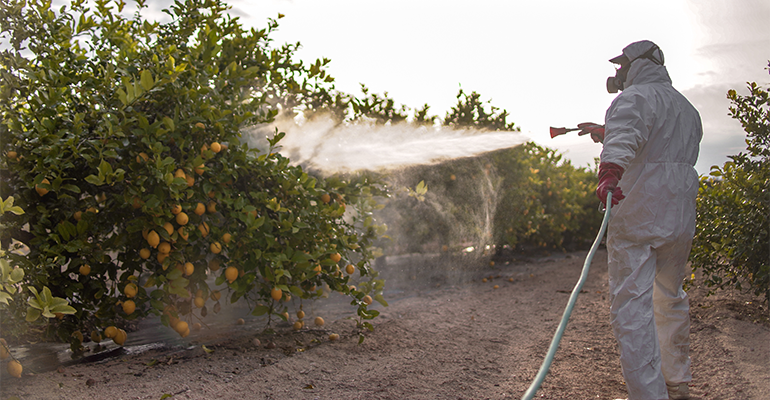
In the June 25 2026 ruling, the Supreme Court concluded that Bayer could not be held liable for failing to warn about the health risks associated with its glyphosate-based products because additional warning labels, like a cancer warning label, would go against federal-law labelling obligations and wider US Environmental Protection Agency (EPA) findings.
“The EPA has repeatedly evaluated glyphosate and repeatedly concluded that glyphosate is not likely to cause cancer. EPA's assessment is shared by many other regulatory bodies around the world,” the Court said in its headnote for the ruling. Federal law, it continued, requires Monsanto to sell Roundup with the EPA approved label for pesticides; “that is, the label without the cancer warning”.
The latest ruling follows an initial $1 million awarded to Durnell and subsequent appeal from Monsanto that was later rejected in the Court of Appeals.
Bayer: Ruling should 'contain' litigation
In a company statement, Bayer said the US Supreme Court's decision is a “landmark ruling” that should help “significantly contain the Roundup litigation after nearly a decade of legal battles”.
“The ruling should result in the dismissal of current warning-based claims and bar future failure-to-warn claims,” the company said. Referencing its February 2026 nationwide class settlement, Bayer said Monsanto would continue to pursue final approval of this class settlement and other elements of a “multi-pronged strategy to contain the Roundup litigation”.
The German agrochemical major said glyphosate remains the most studied crop protection tool in the world and that the ruling is good news for industry. “The US Supreme Court decision is good for science, farmers, and industries that depend on regulatory clarity for innovation.”
The American Soybean Association said the decision provides “much-needed clarity” for the regulation of glyphosate products. “For decades, the US Environmental Protection Agency, along with regulatory authorities around the world, has repeatedly concluded that glyphosate does not pose a cancer risk when used as directed,” it said in a statement. “State-level requirements have led to a burdensome regulatory patchwork that conflicts with EPA-approved labels and creates confusion, undermining confidence in the regulatory process and limiting access to essential crop protection tools.”
A “major setback for Americans”
However, stakeholders noted that an influential 2013 scientific paper that concluded glyphosate is safe was ghostwritten by developer Monsanto, and that the US Environmental Protection Agency has known this for nearly a decade.
US social welfare non-profit Protect Our Care condemned the Supreme Court ruling, describing it as “deeply misguided” and a “betrayal” of the Make America Health Again (MAHA) movement.
During a press event organised by the non-profit, Dr Vin Gupta, medical analyst and physician, described the decision as a major setback for Americans seeking transparency and accountability around chemical exposure, adding it was “a legal ruling, not a scientific one”.
Dr Melody Cunningham, Montana representative and oncologist, agreed, noting the ruling “does not say glyphosate or Roundup are safe” but rather “shuts the door on cancer patients being able to sue Monsanto”.
Cunningham added: “I really truly believe that this is going to embolden other corporations to ignore safety signals, not just cancer signals, but other safety signals about patients and people's health, and it's really a public health travesty.”
In a separate statement, Angela Huffman, president of farmer-led advocacy group Farm Action, said the ruling weakens protections for farmers, farmworkers, and the public, setting a “dangerous precedent for other corporations seeking similar immunity”.
“We are disappointed by the Court's decision, but this fight is far from over. No corporation should be allowed to use its market power or political influence to put itself above the law. We will continue defending the fundamental right to seek justice,” Huffman said.
Bayer separates Roundup business, creates Ruveon
In the wake of the Supreme Court ruling, Bayer AG announced the consolidation of its US glyphosate business into a distinct entity, Ruveon, which launched on 1 July 2026.
The move, it said, will help reinforce the company's commitment to delivering Roundup brands and glyphosate products and services to US customers.
“Ruveon is expected to be a more nimble and well-positioned player within its commodity-based market, which requires a specialised approach to address competitive dynamics,” Bayer said.
Based in St. Louis, Ruveon will be solely responsible for US glyphosate-based product offerings, pricing, go-to-market strategies, production and logistics.
According to Reuters, the move has prompted speculation that Bayer could be working towards structural changes, including divestments or spin-offs of certain assets. Bayer maintains the move is an “executional step” within a wider five-year framework designed to drive growth, resilience and profitability.

Get more of our news on Google
Set Ingredients Network as a 'Preferred Source' to get quicker access to the news you value.
Related news

Do the US dietary guidelines put UPFs under pressure?
10 Sep 2026
Will the US dietary guidelines change the way Americans eat, swapping ultra-processed foods for whole foods? We asked Dr Barry Popkin, renowned nutrition and obesity researcher.
Read more
Health and wellness engagement matures across Middle East and Africa
4 Sep 2026
Many consumers in the Middle East and Africa are now proactively engaged in health and wellness, looking to integrate better habits and products into their daily lives, say experts.
Read more
Skimpflation: An ‘unfair’ and risky approach to keeping prices low
2 Sep 2026
Consumers see skimpflation – reducing the quality of ingredients due to rising costs – as more unfair than shrinkflation, making it a risky strategy according to recent research.
Read more
‘Urgent gaps’ in achieving 2030 food system goals
27 Aug 2026
Global food systems are failing to meet 2030 targets across indicators including health, environment, and resilience, according to a report co-authored by the Food and Agriculture Organisation (FAO).
Read more
Seven-Eleven uses microbial testing tech to extend katsudon shelf life
26 Aug 2026
Japanese retail company Seven-Eleven has improved its factory’s microbial environment to keep comfort-food staple, katsudon, fresher for longer.
Read more
Chimac’s fusion sauces bring Korean flavours to Europe
25 Aug 2026
Irish sauce brand Chimac is tapping into Korea’s culinary traditions, bringing its flavours and products to European consumers who want a taste of K-food.
Read more
Global demand for instant noodles continues to rise
24 Aug 2026
Global demand for instant noodles reached 124.21 billion servings last year, representing a 0.7% year-on-year increase – or 900 million extra servings.
Read more
Popular barbecue staples experience sharp price increases
19 Aug 2026
The typical cost of US shoppers’ barbecue baskets has risen by 12% over the past year – the fastest annual rise in a decade, figures from The Economist show.
Read more
Hot NPD: Nissin launches first cold-water Cup Noodles
18 Aug 2026
Nissin is taking one of Japan’s most iconic instant meals in a completely new direction with the launch of the first cold water-only Cup Noodles in the brand’s 55-year history.
Read more
Manam Chocolate aims to bring premium Indian cacao to 'the world stage'
11 Aug 2026
Craft chocolate brand Manam Chocolate is investing in local expansion and supply chain innovation throughout India as it works to build out the premium reputation of its locally produced cacao products.
Read more