
Ingredients Categories
Finished Products
Finished Food Categories
- Bakery
- Beverages / Juices
- Cereal and grain products
- Confectionery
- Cooking Fats & Oils
- Dairy
- Egg products
- Fruits & Vegetables
- Infant & Baby food
- Meat, Poultry & Fish
- Nuts & Seeds products
- Other Finished Food Categories
- Pet Food
- Plant-based foods
- Prepared foods
- Sauces & Seasonings
- Sweet & Savoury Spreads
Specialised Finished Products
- Bee products
- Biotic products
- Dietary supplements
- Energy drinks
- Functional beverages
- Functional confectionery
- Functional food
- Functional powders
- Meal replacement products
- Nutricosmetics
- Other Specialised Finished Products
- Pet Dietary Supplements
- Pharma and OTC products
- Protein products
- Sugar replacers / Sweeteners
Health & Wellness Areas
Delivery Formats
Operations & Services
- 3D printing
- Analysis/ Testing
- Auditing & certifications
- Blending & mixing
- Bottling
- Certification
- Clinical trials
- Co-packing
- Coating
- Consulting
- Contract manufacturing
- Drying
- Electrospinning
- Encapsulating
- Enzymatic processing
- Extracting
- Extrusion
- Fat structuring
- Fermentation
- Filling
- Flavour development
- Freeze drying
- Granulating/ grinding/ milling / mixing
- High-pressure processing
- Labelling
- Other Operations & Services
- Packaging
- Packet filling
- Pasturising
- Quality assurance
- Saccharification
- Shear cell processing
- Spray drying
- Sterilisation
- Storage & Logistics
- Tabletting
- Toasting / roasting
- Ultra-high temperature processing
News
Greenpeace study finds microplastics in baby food products
Natasha Spencer-Jolliffe, Freelance Journalist 22 Jun 2026A Greenpeace study found microplastics in nearly every sample taken from Nestlé’s Gerber and Danone’s Happy Baby Organics baby food plastic pouches.
The study by SINTEF Ocean in Norway, commissioned by Greenpeace International, Tiny Plastics, Big Problem: The Hidden Risks of Plastic Pouches for Baby Food, sets out findings from the laboratory testing of popular baby food brands, Nestlé’s Gerber and Danone’s Happy Baby Organics. The researchers identified microplastic particles in every sample analysed.
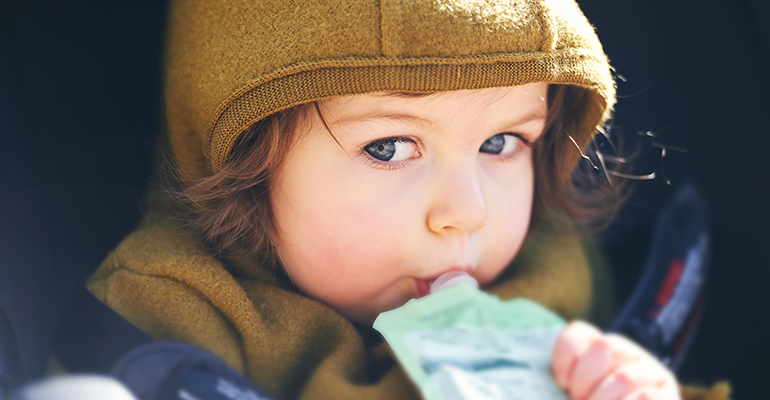
“It also raises big questions about microplastics and chemical migration from other plastic-pouched baby food brands, and food contact plastic packaging more broadly,” Daniel Read, global plastics campaigner at Greenpeace, told Ingredients Network.
Problem could lie with plastic lining
The study suggests a link between polyethylene, the type of plastic the pouches are lined with, and some of the microplastics found in the baby food tested. Laboratory tests suggested a range of chemicals were present in both the product packaging and the food.
Researchers found that for every gram of baby food tested, an average of 54 microplastic particles were identified in Gerber baby food pouches and up to 99 particles in Happy Baby Organic ones. The quantity is equivalent to as many as 270 microplastics per teaspoon in Gerber products and 495 in Happy Baby Organics’ items.
Analysing three pouches each of two baby food products, Nestlé’s Gerber yoghurt puree and Danone’s Happy Baby Organics fruit puree, the researchers tested these items as sold and so were not heated. As a result, this suggests plastic packaging may be a source of contamination, exposing babies to potentially thousands of harmful microplastic fragments.
The study estimated there were more than 11,000 microplastic particles in each Happy Baby Organics pouch and 5,000 in each Gerber pouch.
It also found a range of plastic-associated chemicals in both the products’ packaging and food, including a potential endocrine disruptor in the Gerber samples tested. Endocrine disruptors are natural or manufactured chemicals that may mimic or disrupt the body’s hormones.
Due to the nature of the tests conducted, it is not currently known which part of the production process microplastics entered the baby food.
Nestlé and Danone's response
“Nestlé and Danone responded to Greenpeace International about the findings of the research with excuses instead of action to reduce the microplastic and chemical exposure risk for babies who eat their pouched baby food products,” said Read.
The Break Free From Plastic movement has ranked Nestlé and Danone as among the world’s top plastic polluters numerous times, in its global brand audits.
Greenpeace is calling on both household names and all baby food producers to urgently investigate their products and prove they are not putting young children at risk of exposure. Furthermore, they want to see these companies commit to phasing out plastic packaging.
“Both companies must commit to further testing of their products and to phase out plastic pouches for plastic-free, non-toxic, reusable packaging alternatives,” Read added.
Plastic squeeze pouches dominate baby food packaging
Globally, plastic squeeze pouches have quickly become the fastest-growing packaging format, up 8.18% year on year (YoY) to 2031. Due to extensive marketing, limited options in the packaging sector and their convenience, plastic squeeze pouches accounted for 37.15% of the global baby food market by volume in 2025, surpassing all other packaging types, including glass jars.
Despite advocacy efforts, plastic production and use have surged, with packaging accounting for approximately 40% of global plastic production.
Flexible multilayer plastics, which include baby food pouches, are known for their difficult-to-recycle properties and are major contributors to pollution in certain regions. These are also expected to grow by 5.3% YoY to 2035.
Preventing microplastics in production
Food manufacturers can take steps to help ensure that microplastics do not enter production environments.
“This study is a wake-up call for parents everywhere, who trust these brands to put their kids first. Plastic-dependent companies like Nestlé and Danone owe families a clear answer: what are they doing to eliminate microplastics and chemicals from the products they sell to babies?” said Graham Forbes, global plastics campaign lead from Greenpeace USA.
The precautionary principle, established over 20 years ago, forms the basis of environmental law and contributes to the development of health policies. It states that when an activity poses threats to human health or the environment, precautionary measures are warranted. This is the case even if some cause-and-effect relationships are not yet fully established scientifically.
“Corporations have more than enough information to apply the precautionary principle and take immediate action to reduce the production and use of harmful plastics and chemicals,” Read said.
Greenpeace said it hopes the research will serve as a warning to all brands selling baby food and other products packaged and sold in plastic that they may be exposing their customers to unintended plastic ingredients.
“As major sellers of baby food under national and house brands, retailers have an added responsibility to transform the baby food aisle so only non-toxic, plastic-free, reusable packaging is on offer for parents to choose from,” Read added.
Governments around the globe are currently negotiating on the United Nations’ Global Plastics Treaty. Greenpeace wants leaders to act urgently to ban these products, reduce plastic production and end uncontrolled, unregulated contamination by plastics and chemicals.

Get more of our news on Google
Set Ingredients Network as a 'Preferred Source' to get quicker access to the news you value.
Related news

Do the US dietary guidelines put UPFs under pressure?
10 Sep 2026
Will the US dietary guidelines change the way Americans eat, swapping ultra-processed foods for whole foods? We asked Dr Barry Popkin, renowned nutrition and obesity researcher.
Read more
Health and wellness engagement matures across Middle East and Africa
4 Sep 2026
Many consumers in the Middle East and Africa are now proactively engaged in health and wellness, looking to integrate better habits and products into their daily lives, say experts.
Read more
Skimpflation: An ‘unfair’ and risky approach to keeping prices low
2 Sep 2026
Consumers see skimpflation – reducing the quality of ingredients due to rising costs – as more unfair than shrinkflation, making it a risky strategy according to recent research.
Read more
‘Urgent gaps’ in achieving 2030 food system goals
27 Aug 2026
Global food systems are failing to meet 2030 targets across indicators including health, environment, and resilience, according to a report co-authored by the Food and Agriculture Organisation (FAO).
Read more
Seven-Eleven uses microbial testing tech to extend katsudon shelf life
26 Aug 2026
Japanese retail company Seven-Eleven has improved its factory’s microbial environment to keep comfort-food staple, katsudon, fresher for longer.
Read more
Chimac’s fusion sauces bring Korean flavours to Europe
25 Aug 2026
Irish sauce brand Chimac is tapping into Korea’s culinary traditions, bringing its flavours and products to European consumers who want a taste of K-food.
Read more
Global demand for instant noodles continues to rise
24 Aug 2026
Global demand for instant noodles reached 124.21 billion servings last year, representing a 0.7% year-on-year increase – or 900 million extra servings.
Read more
Popular barbecue staples experience sharp price increases
19 Aug 2026
The typical cost of US shoppers’ barbecue baskets has risen by 12% over the past year – the fastest annual rise in a decade, figures from The Economist show.
Read more
Hot NPD: Nissin launches first cold-water Cup Noodles
18 Aug 2026
Nissin is taking one of Japan’s most iconic instant meals in a completely new direction with the launch of the first cold water-only Cup Noodles in the brand’s 55-year history.
Read more
Manam Chocolate aims to bring premium Indian cacao to 'the world stage'
11 Aug 2026
Craft chocolate brand Manam Chocolate is investing in local expansion and supply chain innovation throughout India as it works to build out the premium reputation of its locally produced cacao products.
Read more