
Ingredients Categories
Finished Products
Finished Food Categories
- Bakery
- Beverages / Juices
- Cereal and grain products
- Confectionery
- Cooking Fats & Oils
- Dairy
- Egg products
- Fruits & Vegetables
- Infant & Baby food
- Meat, Poultry & Fish
- Nuts & Seeds products
- Other Finished Food Categories
- Pet Food
- Plant-based foods
- Prepared foods
- Sauces & Seasonings
- Sweet & Savoury Spreads
Specialised Finished Products
- Bee products
- Biotic products
- Dietary supplements
- Energy drinks
- Functional beverages
- Functional confectionery
- Functional food
- Functional powders
- Meal replacement products
- Nutricosmetics
- Other Specialised Finished Products
- Pet Dietary Supplements
- Pharma and OTC products
- Protein products
- Sugar replacers / Sweeteners
Health & Wellness Areas
Delivery Formats
Operations & Services
- 3D printing
- Analysis/ Testing
- Auditing & certifications
- Blending & mixing
- Bottling
- Certification
- Clinical trials
- Co-packing
- Coating
- Consulting
- Contract manufacturing
- Drying
- Electrospinning
- Encapsulating
- Enzymatic processing
- Extracting
- Extrusion
- Fat structuring
- Fermentation
- Filling
- Flavour development
- Freeze drying
- Granulating/ grinding/ milling / mixing
- High-pressure processing
- Labelling
- Other Operations & Services
- Packaging
- Packet filling
- Pasturising
- Quality assurance
- Saccharification
- Shear cell processing
- Spray drying
- Sterilisation
- Storage & Logistics
- Tabletting
- Toasting / roasting
- Ultra-high temperature processing
News
RSPO prepares for next stage of sustainable palm oil production
Natasha Spencer-Jolliffe, Freelance Journalist 6 Feb 2025The Roundtable on Sustainable Palm Oil (RSPO), a global standards and governance body, is advocating for stronger regulations and frameworks, and taking action to plug supply chain and traceability interruptions.
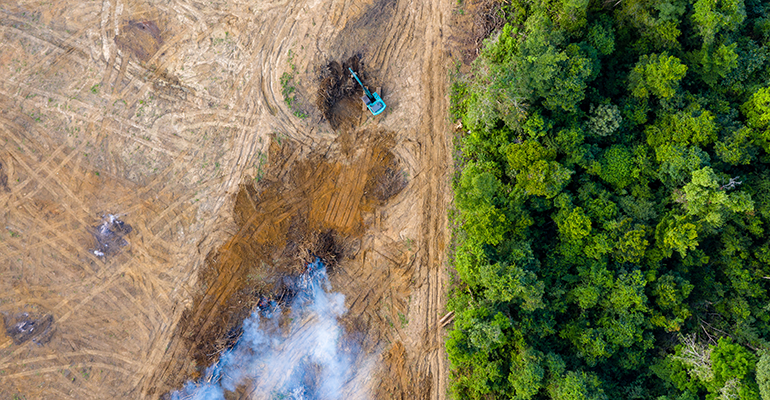
According to RSPO’s Impact Report 2024, the certified palm oil area across the globe now spans 5.2 million hectares, stretching across 23 countries – a figure that grew by 263,028 hectares in 2023. RSPO certification has conserved 466,609 hectares, an area of land 19 times the size of Kuala Lumpur. In addition, remediation covers an area twice the size of Mumbai, totalling 112,954 hectares.
Its latest data shows that in 2023, RSPO credits worth $7 million (€6.7m) directly benefited 85 certified independent smallholder groups. Nine RSPO community outreach and engagement programmes are ongoing in seven countries and the organisation works with over 200 local grassroots organisations.
In its Impact Report 2024, which marks its 20th anniversary, RSPO details its future-looking plans to create a global partnership that makes palm oil sustainable by considering its impact on people, the planet, and prosperity.
Kamal Prakash Seth, global palm oil lead for the World Wildlife Fund (WWF), one of the founding members of RSPO, said: “For the next 20 years, we want to see more robust global regulations that promote a responsible palm oil industry.
“We want to see supply chain actors go beyond certification initiatives like a verified supply chain, ensuring palm oil production is free from deforestation conversion and human rights violations.”
Implementing a theory of change
After celebrating its 20th anniversary, RSPO is now turning its attention to upcoming challenges and its vision for the next era of sustainable palm oil development. In the coming years, RSPO is calling for more robust national regulations and frameworks to bolster the landscape surrounding sustainable palm oil production.
In 2023, RSPO modified its Theory of Change (ToC) to offer increased clarity and purpose to the organisation and its members’ required actions, strategies, and output. The updated ToC will move away from a cause-and-effect model as RSPO seeks to better reflect the interconnected pathways that successfully achieve sustainable palm oil impacts and changes.
In 2023, 26 new RSPO Smallholder Support Fund (RSSF) projects were funded to benefit 4,787 new independent smallholders (ISHs) worldwide in six countries. As of December 2023, over 164,000 smallholders across 15 countries were RSPO certified.
Indonesia accounts for more than 70% of this figure, with almost 100,000 scheme smallholders and over 25,000 ISHs. Papua New Guinea follows, with nearly 19,000 scheme smallholders, and then Thailand, at over 7,000 ISHs.
Filling supply chain and traceability gaps
Expanding the number of members and countries committing to resilient and comprehensive sustainable palm oil development may help overcome one particular challenge: interrupted supply chains.
Proforest, a non-profit that helps people manage and source natural resources sustainably, published a study in July 2024 that explored the impact of the European Union Deforestation Regulation (EUDR). It identified problems related to supply chain interruptions, such as gaps in smallholder farmers’ operations and traceability.
The study conducted a gap analysis to discover areas of alignment and divergence between the EUDR requirements – expected to come into effect in December this year – the RSPO Independent Smallholder (ISH) Standard and associated group certification requirements. It states that a deforestation approach, like that stipulated by the EUDR, which focuses on supply chain and traceability risks, puts smallholders at a disadvantage.
The upcoming regulation’s traceability requirements and exclusion of noncompliant independent smallholders may favour shorter supply chains and produce better direct links and trade between ISH associations and mills or buyers. As a result, this approach may lower ISHs’ reliance on middle supply chain providers and traders, improving their visibility, reducing unfair payment risks, and enabling them to receive a larger profit share.
In its conclusion, the Proforest study recognises RSPO’s important role in pushing best practices in the food, beverage, and wider palm oil-related industries for its supply chain actors. This approach recognises how RSPO can support improved integration between food and beverage smallholders, intermediaries, mills, refineries, and buyers.
The study’s goal is to ensure sustainable practices occur around the globe, and the costs of adhering to these to produce sustainable palm oil are shared throughout the food and beverage supply chain.
Developing comprehensive knowledge
In response to the Proforest findings, RSPO announced on 20 January that it had secured an ISEAL Innovations Fund Grant designed to tackle the supply chain and traceability gaps relating to ISH volumes.
Using the grant, RSPO will strive to enact a multipronged approach to ensure continued and potentially increased access to fresh fruit bunches from certified sustainable independent smallholders and improve internal RSPO tools and systems. By adopting this approach, RSPO hopes to develop its knowledge of interrupted supply chains by analysing those that occur throughout the supply chain.
“Ensuring smallholders’ inclusion is critical to transforming the palm oil industry into a more sustainable one, especially considering that smallholders account for 40-50% of global palm oil production,” said Francisco Naranjo, RSPO’s technical and smallholder director.
“In this regard, RSPO is fully committed to developing mechanisms and incentives that promote more integrated supply chains, ensuring that smallholders are not left behind.”

Get more of our news on Google
Set Ingredients Network as a 'Preferred Source' to get quicker access to the news you value.
Related news

Do the US dietary guidelines put UPFs under pressure?
10 Sep 2026
Will the US dietary guidelines change the way Americans eat, swapping ultra-processed foods for whole foods? We asked Dr Barry Popkin, renowned nutrition and obesity researcher.
Read more
Health and wellness engagement matures across Middle East and Africa
4 Sep 2026
Many consumers in the Middle East and Africa are now proactively engaged in health and wellness, looking to integrate better habits and products into their daily lives, say experts.
Read more
Skimpflation: An ‘unfair’ and risky approach to keeping prices low
2 Sep 2026
Consumers see skimpflation – reducing the quality of ingredients due to rising costs – as more unfair than shrinkflation, making it a risky strategy according to recent research.
Read more
‘Urgent gaps’ in achieving 2030 food system goals
27 Aug 2026
Global food systems are failing to meet 2030 targets across indicators including health, environment, and resilience, according to a report co-authored by the Food and Agriculture Organisation (FAO).
Read more
Seven-Eleven uses microbial testing tech to extend katsudon shelf life
26 Aug 2026
Japanese retail company Seven-Eleven has improved its factory’s microbial environment to keep comfort-food staple, katsudon, fresher for longer.
Read more
Chimac’s fusion sauces bring Korean flavours to Europe
25 Aug 2026
Irish sauce brand Chimac is tapping into Korea’s culinary traditions, bringing its flavours and products to European consumers who want a taste of K-food.
Read more
Global demand for instant noodles continues to rise
24 Aug 2026
Global demand for instant noodles reached 124.21 billion servings last year, representing a 0.7% year-on-year increase – or 900 million extra servings.
Read more
Popular barbecue staples experience sharp price increases
19 Aug 2026
The typical cost of US shoppers’ barbecue baskets has risen by 12% over the past year – the fastest annual rise in a decade, figures from The Economist show.
Read more
Hot NPD: Nissin launches first cold-water Cup Noodles
18 Aug 2026
Nissin is taking one of Japan’s most iconic instant meals in a completely new direction with the launch of the first cold water-only Cup Noodles in the brand’s 55-year history.
Read more
Manam Chocolate aims to bring premium Indian cacao to 'the world stage'
11 Aug 2026
Craft chocolate brand Manam Chocolate is investing in local expansion and supply chain innovation throughout India as it works to build out the premium reputation of its locally produced cacao products.
Read more