
Ingredients Categories
Finished Products
Finished Food Categories
- Bakery
- Beverages / Juices
- Cereal and grain products
- Confectionery
- Cooking Fats & Oils
- Dairy
- Egg products
- Fruits & Vegetables
- Infant & Baby food
- Meat, Poultry & Fish
- Nuts & Seeds products
- Other Finished Food Categories
- Pet Food
- Plant-based foods
- Prepared foods
- Sauces & Seasonings
- Sweet & Savoury Spreads
Specialised Finished Products
- Bee products
- Biotic products
- Dietary supplements
- Energy drinks
- Functional beverages
- Functional confectionery
- Functional food
- Functional powders
- Meal replacement products
- Nutricosmetics
- Other Specialised Finished Products
- Pet Dietary Supplements
- Pharma and OTC products
- Protein products
- Sugar replacers / Sweeteners
Health & Wellness Areas
Delivery Formats
Operations & Services
- 3D printing
- Analysis/ Testing
- Auditing & certifications
- Blending & mixing
- Bottling
- Certification
- Clinical trials
- Co-packing
- Coating
- Consulting
- Contract manufacturing
- Drying
- Electrospinning
- Encapsulating
- Enzymatic processing
- Extracting
- Extrusion
- Fat structuring
- Fermentation
- Filling
- Flavour development
- Freeze drying
- Granulating/ grinding/ milling / mixing
- High-pressure processing
- Labelling
- Other Operations & Services
- Packaging
- Packet filling
- Pasturising
- Quality assurance
- Saccharification
- Shear cell processing
- Spray drying
- Sterilisation
- Storage & Logistics
- Tabletting
- Toasting / roasting
- Ultra-high temperature processing
News
Snap, crackle, flop? Kellanova replaces rice with rice flour in iconic cereal brands
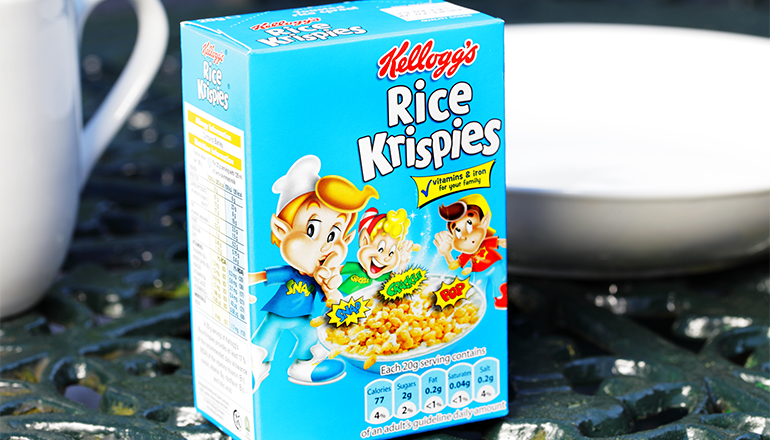
David Burrows, Freelance Journalist 16 Nov 2026Kellanova has swapped whole rice for rice and corn flour in Kellogg’s Rice Krispies and Coco Pops, blaming extreme weather for rice supply issues – and prompting a backlash.
Kellanova – Kellogg’s parent company – has changed the recipes for its Rice Krispies and Coco Pops cereals in Europe, sparking a backlash from consumers and raising question marks over its procurement planning and sustainability commitments.
At a glance:
- Kellanova says the reformulation is due to changing weather conditions but critics say it may be due to cost.
- The new recipes also contain gluten, adding allergens that were previously absent.
- Experts warn food companies to expect heightened commodity challenges in the future.
Citing availability and quality issues with rice due to climate change, the US-headquartered company is now using rice flour and corn flour instead. The iconic ‘snap, crackle and pop’ of Rice Krispies is likely to be slower and quieter, Kellanova told reporters as the change attracted criticism and confusion across social media platforms.
Whether this really is a change due to climate or costs is being hotly debated. Legally, Kellanova appears to have done nothing wrong — and has put a ‘call out’ on packs citing an “allergen change”: the new recipes contain wheat gluten, so coeliac shoppers have lost a product they relied on.
A company statement noted: “We appreciate that even small changes to a much-loved product can feel noticeable and that’s why we have approached this with a lot of care and consideration.”
Kellanova said it would be assessing consumer feedback on the changes.
The rules of reformulation
Rice Krispies is sold under the Kellogg's consumer brand name, while in the UK and internationally the brand is owned by Kellanova (now part of Mars). In the US, where the recipe for the breakfast cereal has not been changed, the brand is owned by WK Kellogg Co (now part of Ferrero).
Kellanova was approached for further comment on its sourcing of rice. For Rice Krispies sold in Europe, the rice is reported to come from Italy and Spain — both countries that have been hit by extreme weather conditions recently.
The company has stated that one of the reasons behind the reformulation away from rice grains to rice flour and corn flour, is that climate change has led to shortages of rice; and it has adapted accordingly.
However, not all manufacturers have followed suit — including those manufacturing own label alternatives. This suggested the move could in fact be a price-led commercial decision, according to Chris Hilson, professor of environmental law at the University of Reading, UK.
“[C]onsumers shouldn’t be misled if climate is just a convenient excuse for changes to products they value in their original formulation,” Hilson told Ingredients Network. “That may or may not be the case here – without the hearing of an official complaint and access to more information, it’s hard to tell. It will be interesting to see if such a complaint is made,” he added.
Rice flour does add to the processing element, which has become a key factor in consumer acceptance.
As far as the law regarding reformulations are concerned, Kellanova has done nothing wrong.
“There isn’t any obligation for Kellogg’s or any other food business to notify a consumer of a change of ingredients,” explained Dominic Watkins, partner at law firm DWF. “The obligation is to provide an accurate ingredients list and it would also comply with the naming provisions – it looks like Kellogg’s has done that.”
There could be another legal issue though. EU food law prohibits a food to mislead in relation to the characteristics of the food and, in particular, its nature, identity, properties, composition, quantity, durability, country of origin or place of provenance, method of manufacture or production.
Watkins told Ingredients Network: “Given the prominence of ‘rice’ in the name, perhaps this elevates the importance of the ingredient, but at most here the average consumer is expecting the product to contain rice and given that rice flour is (presumably in this case) derived from rice, consumers are not misled: they still get a product derived from rice that is fundamentally fulfilling the same function.
“Maybe they could argue that the change in manufacturing process is significant but it seems to be more focussed on the ingredient than the process,” he added.
Will consumers like the new recipes?
Like any change, consumers may not like the new taste or flavour. And with many breakfast cereals struggling for growth currently — as well as being under pressure from regulatory changes in relation to marketing and reformulation — this is undoubtedly a risk for the Rice Krispies brand, as well as Kellogg’s.
“I’m surprised that the formula was changed so dramatically. It’s a different product,” Sarah Blanchard, associate head of ESG at food and grocery consultancy Prof. Consulting Group, told Ingredients Network. And “the way Kellogg’s have handled it means that customers feel cheated,” she added.
Few details of the reformulation process have been made public, but experts said the substitution of a grain with flour is relatively straightforward — until you consider the texture, puffing, snap, and crackle associated with Rice Krispies. Shelf-life, production performance and cost will also have had to be aligned with the old recipe.
“For food businesses, the ability to reformulate quickly is becoming a core capability,” said David Sack, CEO at AKA Foods Netherlands, a food tech startup.
CFOs told to spend now to secure resilient supplies
This is likely just the start of a reformulation era as food companies try to improve the resilience of their supplies with more crops and more areas becoming exposed to extreme weather, environmental risks, and geopolitical upset.
“This is a pattern we see throughout the system now,” explained Ivo Degn, founder of regenerative agriculture experts Re:Source.
Degn questions the argument that Kellanova “could not adapt” as rice crops were hit. Kate Cawley, founder and managing director at the Future Food Movement — a community of food leaders including representatives from the likes of Warburtons, Greencore, Tesco and Premier Foods — said the frustration she hears "repeatedly [...] is getting boards, particularly CFOs [chief financial officers] to invest in supply resilience”.
Following a November FFM event she told Ingredients Network: “The investment hits today’s P&L [profit and loss] while the risk it protects against may not yet be visible. But waiting until supply problems force your hand can mean more expensive choices, including reformulation that risks losing customers. CFOs need to understand where spending now will best protect future earnings,” she added.

Get more of our news on Google
Set Ingredients Network as a 'Preferred Source' to get quicker access to the news you value.
Related news

Supermarket cyber-attacks: How can retailers protect themselves?
11 Nov 2026
Cyber-attacks have hit supermarket refrigeration systems across Europe in recent weeks, highlighting the need for a coordinated response to cybercrime, says one expert.
Read more
China bets big on AI to ‘reshape’ the global agri-food system
10 Nov 2026
Leveraging AI is part of the Chinese government’s six-point consensus to deliver on its agri-food ambitions.
Read more
How manufacturers can reduce food loss in factory operations
4 Nov 2026
Small factory inefficiencies can send valuable ingredients down the drain, resulting in losses and prompting the sector to audit its waste-reduction methods. What solutions exist?
Read more
Seafood giant Umios expands premium pet food in Asia
3 Nov 2026
Japanese company Umios has invested in Thailand’s Patay Food Group and partnered with Malaysia’s Pet World International.
Read more
Whey protein production struggles to keep pace with demand
22 Oct 2026
Despite high whey protein prices and strong demand, growing production pressures are prompting questions about pricing sustainability, processing capacity, and alternative dairy options.
Read more
Manufacturers face volatility as food prices near four-year high
21 Oct 2026
Commodity pressures are mounting with the Food and Agriculture Organization’s (FAO) Food Price Index reaching its highest level since 2022.
Read more
In India, a protein boom with a difference
20 Oct 2026
In India, rising interest in protein is more focused on lower-cost protein and local specialties – think protein-fortified atta, paneer, tikis, and chaap – than fitness.
Read more
Brazil pushes forward on restricting ultra-processed foods
14 Oct 2026
The Brazilian government is pushing ahead with its proposal calling on the World Health Organization (WHO) to restrict the marketing of ultra-processed foods – a move causing a mixed response.
Read more
UK biscuit maker pladis targets Chinese snack market for growth
6 Oct 2026
Pladis, the maker of iconic British biscuit brand McVitie’s, aims to boost disappointing profits by targeting China with products tailored to Chinese preferences.
Read more
Reinventing soda: Zero sugar, functional benefits, and new indulgence
30 Sep 2026
Zero-sugar, functional, and indulgent sodas are redefining what a carbonated soft drink can offer in today’s evolving market.
Read more