
Ingredients Categories
Finished Products
Finished Food Categories
- Bakery
- Beverages / Juices
- Cereal and grain products
- Confectionery
- Cooking Fats & Oils
- Dairy
- Egg products
- Fruits & Vegetables
- Infant & Baby food
- Meat, Poultry & Fish
- Nuts & Seeds products
- Other Finished Food Categories
- Pet Food
- Plant-based foods
- Prepared foods
- Sauces & Seasonings
- Sweet & Savoury Spreads
Specialised Finished Products
- Bee products
- Biotic products
- Dietary supplements
- Energy drinks
- Functional beverages
- Functional confectionery
- Functional food
- Functional powders
- Meal replacement products
- Nutricosmetics
- Other Specialised Finished Products
- Pet Dietary Supplements
- Pharma and OTC products
- Protein products
- Sugar replacers / Sweeteners
Health & Wellness Areas
Delivery Formats
Operations & Services
- 3D printing
- Analysis/ Testing
- Auditing & certifications
- Blending & mixing
- Bottling
- Certification
- Clinical trials
- Co-packing
- Coating
- Consulting
- Contract manufacturing
- Drying
- Electrospinning
- Encapsulating
- Enzymatic processing
- Extracting
- Extrusion
- Fat structuring
- Fermentation
- Filling
- Flavour development
- Freeze drying
- Granulating/ grinding/ milling / mixing
- High-pressure processing
- Labelling
- Other Operations & Services
- Packaging
- Packet filling
- Pasturising
- Quality assurance
- Saccharification
- Shear cell processing
- Spray drying
- Sterilisation
- Storage & Logistics
- Tabletting
- Toasting / roasting
- Ultra-high temperature processing
News
Asian beverage brands deal with rising costs
4 Jan 2023
Decreasing bottle sizes or increasing prices? Asian beverage brands are finding “creative approaches” to manage rising costs, according to industry analysts.
Retail sales of soft drinks in Asia Pacific are set to reach $182bn this year but the economic outlook remains particularly challenging, and the soft drinks category could be hit hard.
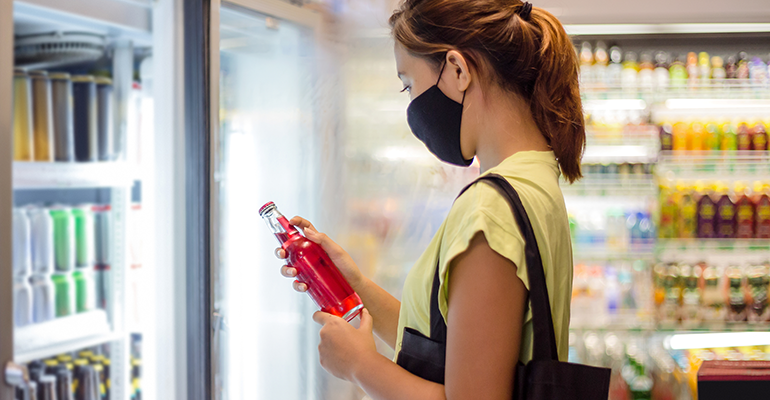
The lingering war in Ukraine has pumped up inflation and increased uncertainty, noted Euromonitor International insights manager Nathanael Lim in a recent blog. Regional real GDP growth is expected to slow significantly from 6.7% in 2021 to 4.2% in 2022 and 4.7% in 2023, according to its Q4 2022 baseline forecasts.
“[…] soft drinks is expected to take a big hit, as consumers in Asia Pacific reduce their consumption and seek cheaper alternatives,” Lim wrote.
Indeed, value for money is a key feature in purchases, especially in emerging markets like Vietnam and the Philippines, so drinks manufacturers are having to adapt and innovate.
Some are employing what Lim calls “creative approaches”, such as a flexible price/packaging mix in order to manage rising costs.
Creative approaches: Product diversification and smaller packages
Some have moved to smaller packaging formats, he tells Ingredients Network. In Japan, Oi Ocha Bold Green Tea launched a smaller pack size, 350ml PET bottles, in order to “maximise margin to drive growth”. This serves to cope with rising cost of raw materials in the short-term, but in the long-term companies are focusing on sustainability and pushing for the use of recycled plastics in their packaging, he adds.
Others are doing all they can to maintain prices and keep costs down for consumers as they struggle with the cost-of-living crisis. Lim offers the example of the energy drinks companies TCP Group and Carabao in Thailand which launched a campaign earlier this year to maintain prices for as long as possible. Still, this was done in tandem with product diversification, launching new products with health benefits, such as Kanzou X2, which is priced at a premium, targeting health-conscious consumers, Lim notes.
Suntory, Coca-Cola, and Kirin raise prices
Some manufacturers have been left with no choice but to increase prices – in some cases for the first time in decades.
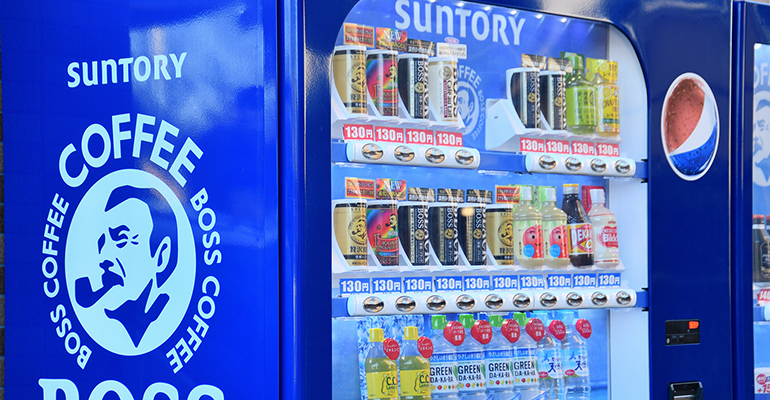
In Japan, Suntory started increasing prices in October 2022 across various channels, including vending machines. Other companies, such as Kirin and Coca-Cola, followed suit due to continued increases in materials costs such as PET plastic resin (for making bottles). Brands often make such announcements early in order to prepare consumers, Lim says.
He adds: “In other emerging markets, including Thailand, companies have adopted varying price strategies. Energy drinks player Osotspa has increased the price of its M-150 drink in the 150ml pack size from THB10 to THB12, its first price adjustment in 37 years.”
Given such drinks are considered essential by low-income consumers for boosting energy the “huge” price spikes in some of these products will hit them hardest. Developed markets, like South Korea and Japan, reported minimal price increases due to the lower level of inflation. Manufacturers were also better able to absorb rises in costs across transport, packaging and raw materials.
Lim suggests manufacturers will need to continue to adopt new strategies to weather the price storm and prevent consumers down-trading; more innovation is likely on the way and health could be a critical factor.
 © AdobeStock/tamayura39
GlobalData: Functional drinks for immune health should prove popular
In Asia Pacific, low-carb/low sugar products remain key to driving growth, he says, but there have also been more beverages infused with vitamins and local herbal ingredients like ginger to boost immunity.
“Beverage manufacturers are coming up with new functional ingredients focused on consumer health,” he explains. “Besides immunity, where vitamins and ginger are infused in beverages such as RTD [ready-to-drink] tea, there have been other ingredients such as chamomile and cannabis introduced, to aid in relaxation and mood management. Examples include Jayo ginger RTD tea in Indonesia and Sappe Beauti Drink Green Relaxing RTD tea in Thailand.”
Additions that help support immunity are likely to prove popular, according to analysts at GlobalData. The “healthier” and functional drinks will continue to do well in the region, and the demand for plant and herbal-based raw materials and beverages has increased significantly, noted consumer market intelligence director Suzanna Clarke.
GlobalData forecasts that water and hot beverages will “perform best” over the next five years, increasing by 51.2bn litres and 83.1bn litres respectively. Its experts point towards rising population, growing disposable incomes and health-and-wellness trends that will all fuel growth.

Get more of our news on Google
Set Ingredients Network as a 'Preferred Source' to get quicker access to the news you value.
Related news

Skimpflation: An ‘unfair’ and risky approach to keeping prices low
2 Sep 2026
Consumers see skimpflation – reducing the quality of ingredients due to rising costs – as more unfair than shrinkflation, making it a risky strategy according to recent research.
Read more
NielsenIQ’s EU barometer shows Britain leading in grocery inflation
31 Aug 2026
Britain was the only country to record grocery inflation above 2%, according to NielsenIQ data that compared Europe’s five biggest grocery markets from February to May 2026.
Read more
‘Urgent gaps’ in achieving 2030 food system goals
27 Aug 2026
Global food systems are failing to meet 2030 targets across indicators including health, environment, and resilience, according to a report co-authored by the Food and Agriculture Organisation (FAO).
Read more
China beverages: Is herbal innovation the future?
20 Aug 2026
Herbal and botanical innovation in China's drinks market continues to grow, with ingredients like astragalus root, ginger, and ginseng in the spotlight – and focus shifting far beyond refreshment.
Read more
Popular barbecue staples experience sharp price increases
19 Aug 2026
The typical cost of US shoppers’ barbecue baskets has risen by 12% over the past year – the fastest annual rise in a decade, figures from The Economist show.
Read more
Beyond 'nice to have': A spotlight on US functional beverages
12 Aug 2026
Functional beverage interest in the US is gaining important ground as consumers now expect function rather than see it as "nice to have", and there are clear market gaps for growth, according to Spate.
Read more
Manam Chocolate aims to bring premium Indian cacao to 'the world stage'
11 Aug 2026
Craft chocolate brand Manam Chocolate is investing in local expansion and supply chain innovation throughout India as it works to build out the premium reputation of its locally produced cacao products.
Read more
Digital twin technology gains ground in food manufacturing
6 Aug 2026
Food and beverage companies are increasingly turning to digital twins to optimise and automate manufacturing processes, but opportunities stretch far beyond this, say experts.
Read more
How Secon Taste is putting upcycled snacks on shelves
4 Aug 2026
Hungarian zero-waste startup Secon Taste is turning surplus food into upcycled snacks such as fibre-packed granola, instant porridge, and a circular coffee-tasting box.
Read more
Codex sets global thresholds for ‘may contain’ labels
3 Aug 2026
Codex Alimentarius has adopted its first global guidance on when to use “may contain” allergen warnings, setting thresholds intended to stop the label being used as blanket legal cover.
Read more