
Ingredients Categories
Finished Products
Finished Food Categories
- Bakery
- Beverages / Juices
- Cereal and grain products
- Confectionery
- Cooking Fats & Oils
- Dairy
- Egg products
- Fruits & Vegetables
- Infant & Baby food
- Meat, Poultry & Fish
- Nuts & Seeds products
- Other Finished Food Categories
- Pet Food
- Plant-based foods
- Prepared foods
- Sauces & Seasonings
- Sweet & Savoury Spreads
Specialised Finished Products
- Bee products
- Biotic products
- Dietary supplements
- Energy drinks
- Functional beverages
- Functional confectionery
- Functional food
- Functional powders
- Meal replacement products
- Nutricosmetics
- Other Specialised Finished Products
- Pet Dietary Supplements
- Pharma and OTC products
- Protein products
- Sugar replacers / Sweeteners
Health & Wellness Areas
Delivery Formats
Operations & Services
- 3D printing
- Analysis/ Testing
- Auditing & certifications
- Blending & mixing
- Bottling
- Certification
- Clinical trials
- Co-packing
- Coating
- Consulting
- Contract manufacturing
- Drying
- Electrospinning
- Encapsulating
- Enzymatic processing
- Extracting
- Extrusion
- Fat structuring
- Fermentation
- Filling
- Flavour development
- Freeze drying
- Granulating/ grinding/ milling / mixing
- High-pressure processing
- Labelling
- Other Operations & Services
- Packaging
- Packet filling
- Pasturising
- Quality assurance
- Saccharification
- Shear cell processing
- Spray drying
- Sterilisation
- Storage & Logistics
- Tabletting
- Toasting / roasting
- Ultra-high temperature processing
News
Redefining brand value: Empower consumers to be resourceful and creative in the face of rising costs [Interview]
16 Nov 2022
With inflation, greater instability, and supply chain disruptions as a global backdrop of 2022, consumers are increasing looking for value, products with functional benefits, and convenience for the coming year, says Innova Market Insights.
Today, political and economic volatility is one of the greatest challenges facing consumers and, amidst the cost-of-living crisis, budgeting for rising food prices has become more prevalent. Innova Market Insights highlights the significance of ‘Redefining Value,’ the leading food and beverage trend in its Top Ten Trends for 2023.
![Redefining brand value: Empower consumers to be resourceful and creative in the face of rising costs [Interview]](/47/pdcnewsitem/11/94/15/FiE22%20Speaker%20Interview_Lu-Ann-Williams_Innova-Market-Insights3.png)
“Over time, food went from 30% of disposable household income to around 10%. It’s hard to accept it going back up. That’s where our top trend of understanding value comes in. What will consumers spend more on and what will they compromise?” says Lu Ann Williams, global insights director at Innova Market Insights.
How brands can offer value
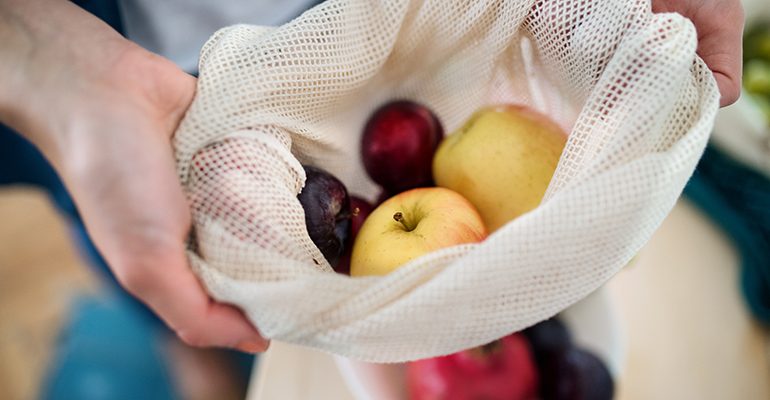
“Fresh and local remain important with consumers. Health is also top of mind; consumers value products with a functional benefit. On the flip side, consumers are more focused than ever on reducing food waste and extracting the most from what they have,” says Williams.
Value can be added in various ways, but consumers are often looking for simplicity and “things they can control”, she adds. “Sustainability is a big concept that’s hard to feel you can impact but some smaller goals like reducing food waste make consumers feel like they are making a contribution,” she says.
Rising food prices affect both consumers and manufacturers. Creativity with ingredients through substitution and upcycling has been a way for manufacturers to tackle the rising costs of ingredients and ensure products remain affordable.
“We have seen ingredient substitution during similar periods in the past and there are cases where an expensive starch might be a substitute for a protein in some applications,” says Williams.
Upcycling “isn’t always cost effective” but consumers have shared with Innova that it is an area of interest that represents value and, when the economic situation worsens, consumers are more invested in waste reduction.
The production of upcycled foods is beneficial to the environment as it helps to repurpose food, that would otherwise be wasted, as a value-added food product. Value-added foods are altered in some way to increase their economic value.
“We’ve seen an increase in upcycling; for example, waste from one product proving an ideal ingredient for another. Equally, technology can be optimised in the production process to ensure the greatest possible use of raw materials. These are clear cases of extracting the most value and return from what you have,” says Williams.
The power of plant-based
A third of consumers surveyed by Innova say they have purchased more plant-based products because there is a greater range available.
“This is a space where there is a lot more innovation in Europe than in other parts of the world. We see a lot of innovation in formats; I can’t think of a recipe that I couldn’t find a meat substitute for,” says Williams.
Plant-based foods have also had a considerable influence on positively changing perceptions toward food technology. Innova’s research indicates a greater level of acceptance of new technologies among consumers who have seen how novel techniques have improved the quality and nutritional benefits of plant-based products.
“Key to this are the benefits technology can be shown to bring. If it makes food healthier, safer, and better for the environment, consumers are much more likely to buy in,” adds Williams.
Another innovative alternative to traditional meat is animal-free meat and dairy products produced using cell-culturing techniques or precision fermentation. German and French consumers show less acceptance than Chinese, Indian and consumers in Latin America who are very open to these new technologies.
“Lab-grown meat proteins and non-animal-derived cheeses are among the advances that consumers are becoming more interested in... Our research shows that when you explain the benefits, consumers are more willing to accept it,” says WIlliams.
 © iStock/Halfpoint
Convenience and quality for busy lifestyles
Attitudes toward quality, convenience, and nutrition have been influenced by the Covid-19 pandemic. During lockdowns, the kitchen became a hub and consumers had more time and desire to experiment and upskill, says Williams.
Post-pandemic, there is now a return to normal routines yet consumers “haven’t lost interest in the fun and functionality of food”. Another of Innova’s Top Ten Trends, which it refers to as “Quick Quality” focuses on quality offerings for the time-limited consumer.
“Consumers are looking for convenience-plus; products and ideas that fit their busier lives but still offer the chance to personalise meals and exercise their creativity. We are seeing interest in things such as meal kits which combine freshness and speed.”

Get more of our news on Google
Set Ingredients Network as a 'Preferred Source' to get quicker access to the news you value.
Related news

The rise of CPG disruptor brands
9 Apr 2026
Bold, relevant, and agile disruptor brands, such as Olly and Poppi are reshaping consumer packaged goods (CPG) and driving growth in stagnant areas – reframing everything about the categories they are showing up in, say experts.
Read more
Vitafoods Middle East and Africa to launch in Dubai in 2026
9 Jan 2026
The Vitafoods portfolio of nutraceutical events is expanding, with Vitafoods Middle East and Africa launching in September 2026 in Dubai, United Arab Emirates.
Read more
Calorie decline and claims fatigue: Euromonitor’s 2026 forecast
6 Jan 2026
Major economic shifts and growing consumer uptake of GLP-1s and AI are shaping how – and what – people eat, according to a Euromonitor market analysis.
Read more
Has ‘clean’ had its day?
22 Dec 2025
Wielding clean-label positioning and fortification as marketing levers is a dangerous strategy, and brands would be better off explaining the hows and whys of the ingredients in their products, say experts.
Read more
Celebrating the winners of the Fi Europe Innovation Awards 2025
3 Dec 2025
Food industry stakeholders celebrated as the winners of the Fi Europe Innovation Awards were announced at a ceremony in Paris.
Read more
Alternative protein startups pivot to B2B ingredients amid funding shift
27 Nov 2025
Alt protein startups are pivoting from consumer meat analogues to high-value B2B ingredients, driven by stronger investor interest, better margins, and clearer commercial pathways.
Read more
Walmart Marketplace’s record growth prompts search for UK sellers
26 Sep 2025
Walmart’s third-party e-commerce platform, Marketplace, has witnessed extraordinary growth – but a need for more product diversity has prompted the retailer to recruit UK sellers.
Read more
The winners of Vitafoods Europe Startup Challenge 2025 revealed
29 May 2025
Four startups – Yomio Drops, PFx Biotech, Revobiom, and Favamole – took top prizes at this year’s Vitafoods Europe Startup Challenge awards.
Read more
East takes on West in the fight for future food flavours
30 Apr 2025
Asian and South American flavours are now key components on global menus, driven by a growing global appetite for culinary mashups.
Read more
Food companies urged to bring ‘joy’ and urgency to healthy food mission
14 Mar 2025
For too long, businesses have treated health and sustainability as separate agendas – but there is growing evidence to show diets that benefit human health can also enhance that of the planet, say experts.
Read more