
Ingredients Categories
Finished Products
Finished Food Categories
- Bakery
- Beverages / Juices
- Cereal and grain products
- Confectionery
- Cooking Fats & Oils
- Dairy
- Egg products
- Fruits & Vegetables
- Infant & Baby food
- Meat, Poultry & Fish
- Nuts & Seeds products
- Other Finished Food Categories
- Pet Food
- Plant-based foods
- Prepared foods
- Sauces & Seasonings
- Sweet & Savoury Spreads
Specialised Finished Products
- Bee products
- Biotic products
- Dietary supplements
- Energy drinks
- Functional beverages
- Functional confectionery
- Functional food
- Functional powders
- Meal replacement products
- Nutricosmetics
- Other Specialised Finished Products
- Pet Dietary Supplements
- Pharma and OTC products
- Protein products
- Sugar replacers / Sweeteners
Health & Wellness Areas
Delivery Formats
Operations & Services
- 3D printing
- Analysis/ Testing
- Auditing & certifications
- Blending & mixing
- Bottling
- Certification
- Clinical trials
- Co-packing
- Coating
- Consulting
- Contract manufacturing
- Drying
- Electrospinning
- Encapsulating
- Enzymatic processing
- Extracting
- Extrusion
- Fat structuring
- Fermentation
- Filling
- Flavour development
- Freeze drying
- Granulating/ grinding/ milling / mixing
- High-pressure processing
- Labelling
- Other Operations & Services
- Packaging
- Packet filling
- Pasturising
- Quality assurance
- Saccharification
- Shear cell processing
- Spray drying
- Sterilisation
- Storage & Logistics
- Tabletting
- Toasting / roasting
- Ultra-high temperature processing
News
The dye is cast: Major US food brands commit to phasing out synthetic colours
David Burrows, Freelance Journalist 21 Jul 2025Major confectionery companies have pledged to eliminate petroleum-based colours by 2027. Yet with 19% of packaged foods containing synthetic dye, will industry leaders follow through on their commitments?
Almost a fifth (19%) of packaged food and beverages contain synthetic food dyes, according to new research evaluating the content of 39,763 US grocery store products. The most common synthetic dye was Food, Drug and Cosmetic Red No.40 (14% of products). Sales of products containing synthetic dyes amounted to $46 billion in 2020.
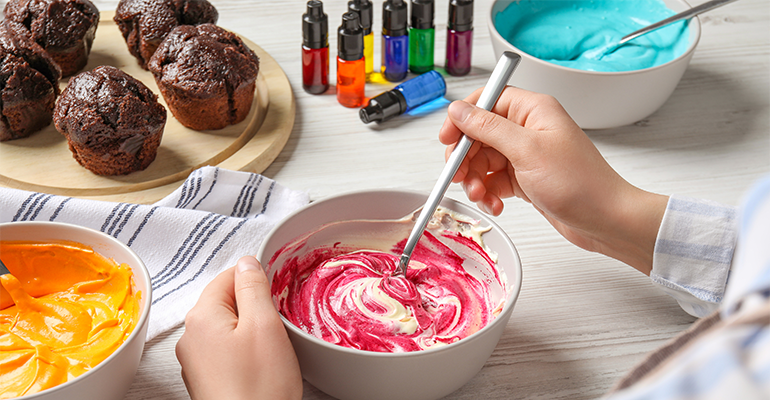
The study showed confectionery companies had the most products containing synthetic dyes, with Ferrero (60%) and Mars (52%) the worst offenders. Over half (51%) of PepsiCo’s energy drinks contained synthetic dyes, as well as 79% of all sports drinks, regardless of the manufacturer.
They also found products in the top five food categories most often marketed to children – confectionery, sugar-sweetened beverages, ready meals, breakfast cereals, and baked goods like cakes, cookies, and pastries – were more likely to contain synthetic dyes. The average sugar content of products containing synthetic dyes was also 141% more than in those without the dyes (33.3 grams/100g versus 13.8g/100g).
FDA announces new measures to ‘Make America Healthy Again’
The findings, published in the Journal of the Academy of Nutrition and Dietetics, follow major announcements from Kraft Heinz, General Mills, and Nestlé to remove the dyes across their US portfolios.
In April, the US Department of Health and Human Services (HHS) and the US Food and Drug Administration (FDA) announced a series of new measures to phase out all petroleum-based synthetic dyes from the nation’s food supply.
“These poisonous compounds offer no nutritional benefit and pose real, measurable dangers to our children’s health and development. That era is coming to an end,” said HHS secretary Robert F. Kennedy, Jr.
The transition from petrochemical-based dyes to natural ones is part of the administration’s broader initiative to “Make America Healthy Again”.
Authorisation for the synthetic dyes Citrus Red No.2 and Orange B will soon be revoked, while work is ongoing with industry to eliminate another six dyes – FD&C Green No.3, FD&C Red No.40, FD&C Yellow No.5, FD&C Yellow No.6, FD&C Blue No.1, and FD&C Blue No.2 – by the end of 2026.
Broken promises
Synthetic food dyes are “entirely unnecessary in the US food supply” but progress towards removing them has been slow, according to Thomas Galligan, principal scientist for food additives and supplements at the Centre for Science in the Public Interest, and one of the authors of the new research.
Galligan said: “The FDA recently asked the food industry to voluntarily phase synthetic dyes out of the food supply, but many companies had previously made promises to stop using them and then failed to keep those promises. So, it remains to be seen if food companies will comply with this new request,” he added.
Kraft Heinz has just committed to not launch any new products in the US with FD&C colours. The owner of brands including Kool-Aid, Jell-O and CapriSun will also remove the remaining FD&C colours from its US product portfolio before the end of 2027. Nearly 90% of Kraft Heinz’s US products are free of FD&C colours (by net sales).
General Mills plans to remove certified colours from all its US cereals and all K-12 (kindergarten to 12th grade) school foods by summer 2026. The owner of Lucky Charms, Cheerios, and Häagen-Dazs will also “work to remove certified colours from its full US retail portfolio by the end of 2027”. Some 85% of the company’s US retail portfolio is currently made without certified colours.
Natural born fillers
Experts consulted by Ingredients Network predicted a flood of similar commitments from companies.
“Phasing out dyes will greatly impact the junk food industry, given the recent decrease in growth from other factors like GLP1,” explained Amrita Bhasin, co-founder and CEO at grocery overstock distributor Sotira.
The technical work of substituting food dyes is no easy feat, added Bryan Quoc Le, food scientist and founder of Mendocino Food Consulting. “There is a tremendous amount of testing, experimenting, and formulating that needs to be done to achieve parity with artificial dyes,” he explained.
In May, the FDA approved three new natural colours – galdieria extract blue, butterfly pea flower extract, and calcium phosphate. However, natural dyes tend to be more expensive because they require more material to achieve the same level of intensity as synthetic food dyes.
Consumer demand for ‘clean label’ products will therefore be a significant catalyst in pushing companies to voluntarily comply with the FDA’s plan to phase out synthetic colour additives, noted Anna Benevente, director of product, labelling and ingredient reviews for Registrar Corp, a global compliance company. “Ultimately, the ‘bottom line’ will make a company move more quickly than regulatory pressures alone,” she added.

Get more of our news on Google
Set Ingredients Network as a 'Preferred Source' to get quicker access to the news you value.
Related news

Do the US dietary guidelines put UPFs under pressure?
10 Sep 2026
Will the US dietary guidelines change the way Americans eat, swapping ultra-processed foods for whole foods? We asked Dr Barry Popkin, renowned nutrition and obesity researcher.
Read more
Food fraud costs UK economy £2bn each year
9 Sep 2026
Food fraud is costing the UK economy up to £2 billion (€2.3 billion) every year although the food sector is more “resilient” than others, according to a recent study.
Read more
Kellogg accelerates work to remove artificial colours from all US cereals
3 Sep 2026
WK Kellogg has announced an accelerated timeline to eliminate all artificial colours and the chemical preservative, BHT, across its full US portfolio of cereals and cereal packaging.
Read more
Skimpflation: An ‘unfair’ and risky approach to keeping prices low
2 Sep 2026
Consumers see skimpflation – reducing the quality of ingredients due to rising costs – as more unfair than shrinkflation, making it a risky strategy according to recent research.
Read more
NielsenIQ’s EU barometer shows Britain leading in grocery inflation
31 Aug 2026
Britain was the only country to record grocery inflation above 2%, according to NielsenIQ data that compared Europe’s five biggest grocery markets from February to May 2026.
Read more
‘Urgent gaps’ in achieving 2030 food system goals
27 Aug 2026
Global food systems are failing to meet 2030 targets across indicators including health, environment, and resilience, according to a report co-authored by the Food and Agriculture Organisation (FAO).
Read more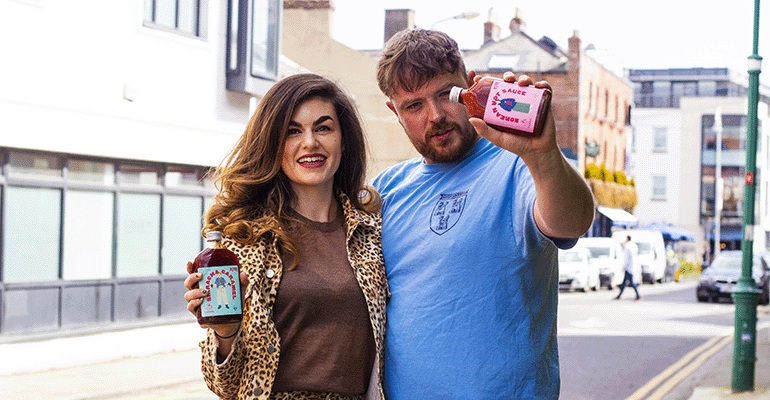
Chimac’s fusion sauces bring Korean flavours to Europe
25 Aug 2026
Irish sauce brand Chimac is tapping into Korea’s culinary traditions, bringing its flavours and products to European consumers who want a taste of K-food.
Read more
Global demand for instant noodles continues to rise
24 Aug 2026
Global demand for instant noodles reached 124.21 billion servings last year, representing a 0.7% year-on-year increase – or 900 million extra servings.
Read more
Popular barbecue staples experience sharp price increases
19 Aug 2026
The typical cost of US shoppers’ barbecue baskets has risen by 12% over the past year – the fastest annual rise in a decade, figures from The Economist show.
Read more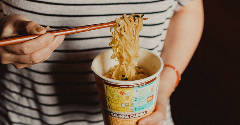
Hot NPD: Nissin launches first cold-water Cup Noodles
18 Aug 2026
Nissin is taking one of Japan’s most iconic instant meals in a completely new direction with the launch of the first cold water-only Cup Noodles in the brand’s 55-year history.
Read more