
Ingredients Categories
Finished Products
Finished Food Categories
- Bakery
- Beverages / Juices
- Cereal and grain products
- Confectionery
- Cooking Fats & Oils
- Dairy
- Egg products
- Fruits & Vegetables
- Infant & Baby food
- Meat, Poultry & Fish
- Nuts & Seeds products
- Other Finished Food Categories
- Pet Food
- Plant-based foods
- Prepared foods
- Sauces & Seasonings
- Sweet & Savoury Spreads
Specialised Finished Products
- Bee products
- Biotic products
- Dietary supplements
- Energy drinks
- Functional beverages
- Functional confectionery
- Functional food
- Functional powders
- Meal replacement products
- Nutricosmetics
- Other Specialised Finished Products
- Pet Dietary Supplements
- Pharma and OTC products
- Protein products
- Sugar replacers / Sweeteners
Health & Wellness Areas
Delivery Formats
Operations & Services
- 3D printing
- Analysis/ Testing
- Auditing & certifications
- Blending & mixing
- Bottling
- Certification
- Clinical trials
- Co-packing
- Coating
- Consulting
- Contract manufacturing
- Drying
- Electrospinning
- Encapsulating
- Enzymatic processing
- Extracting
- Extrusion
- Fat structuring
- Fermentation
- Filling
- Flavour development
- Freeze drying
- Granulating/ grinding/ milling / mixing
- High-pressure processing
- Labelling
- Other Operations & Services
- Packaging
- Packet filling
- Pasturising
- Quality assurance
- Saccharification
- Shear cell processing
- Spray drying
- Sterilisation
- Storage & Logistics
- Tabletting
- Toasting / roasting
- Ultra-high temperature processing
Sponsored Content
enduracarb®: A science-backed trehalose ingredient for athletic endurance
24 Nov 2022
enduracarb® is a science-backed, slow-acting carbohydrate that can power athletes’ performance. Produced using a high-purity production process, it is suitable for a wide variety of applications.
Fitness trends hitting new heights
Since the onset of the pandemic, consumers have become even more interested in improving their fitness levels, with endurance exercise proving particularly popular. This trend is reflected in global Google searches for "exercise endurance", which reached all-time highs at the end of 2020,1 and a New Hope Network study, which found that 45% of consumers cycled, ran, walked, or hiked.2

This growing dedication to fitness is helping to fuel the demand for science-backed sports nutrition products. Data from Euromonitor suggests that the global sports nutrition market will reach US$23 billion by 2023.3 In particular, the share of sports hydration products and energy drinks continues to grow.
With demand for science-based sports nutrition products reaching even higher levels since 2020, trehalose is now attracting widespread interest as a highly effective fuel for endurance exercise. Global sports nutrition product launches featuring trehalose more than doubled from 2018 to 2020.1
Powering the difference
Trehalose is a carbohydrate commonly found in the natural world, helping to preserve plant and animal life. Insects, for example, use trehalose as the main body sugar, providing energy for flight. It is also naturally found in foods including mushrooms, yeast, and honey.
Trehalose is a disaccharide formed from two molecules of glucose joined by what is called an α,α-1,1 glycosidic bond. Bonded glucose molecules are indigestible without the enzyme trehalase, which is present in the human intestine with limited activity. Because trehalose is digested more slowly than other sugars,4 it does not stimulate rapid increase in blood sugar and excessive insulin secretion.
Trehalose therefore offers significant advantages over the rapidly digested carbohydrate sources commonly used in sports nutrition products, such as glucose, maltose or isomaltulose, a popular disaccharide which breaks down into a glucose molecule and a fructose molecule. Fructose may be perceived as undesirable by consumers due to its association with fat accumulation in the liver.5
As a result, trehalose is emerging as the fuel of choice for endurance exercise, helping to maintain performance through steady blood sugar and insulin levels.
Fuelling endurance performance
enduracarb® is a trehalose ingredient developed by Prinova in collaboration with Hayashibara, a world-renowned Japanese food and beverage manufacturing company. Produced using a high-purity production process and certified as an Informed Ingredient, it is now considered one of the world's leading trehalose brands.
enduracarb® is a plant-based, high-quality ingredient which is Non-GMO Project verified, GRAS-designated, Kosher- and Halal-certified. Approved in the EU as a novel food and reviewed by most major regulatory agencies around the world, trehalose is widely considered safe for use in food.
As strong energy source, enduracarb® enables manufacturers to incorporate to their sports nutrition brands an easy-to-understand, science-backed fuel that consumers can trust to power their athletic performance during extended periods of intense exercise.
A proven ingredient for athletic endurance
During endurance sports, muscle glycogen can be depleted to a level that impairs performance.6 To compensate for the loss of glycogen, carbohydrates can be consumed to delay the onset of fatigue.7 Research showed that trehalose induced lower insulin secretion and lead the body to reduce glucose consumption, thus allowing the preservation of skeletal muscle glycogen until later stages of prolonged exercise.6 In the case of low intensity exercise for 60 minutes, the study highlighted as well that more fat is used as an energy source by taking trehalose than glucose.
Indeed, fast-acting carbohydrates such as glucose can cause blood sugar levels to rise rapidly, which then prompts the body to produce more insulin to control the rise. Excess insulin can not only impair the body's ability to burn fat for fuel,8 but can also lower blood sugar levels and cause hypoglycaemia, leading to fatigue and decreased performance.9 Unlike glucose, trehalose is slowly digested and absorbed in the small intestine. Clinical research has shown that blood glucose and insulin levels were significantly lower and more stable in people receiving trehalose compared to those receiving glucose.4,10
enduracarb® has also been shown to combat dehydration. For endurance athletes, dehydration can have a variety of negative impacts on performance.11 Cardiovascular drift, for example, occurs during prolonged exercise at moderate intensity, causing a gradual increase in heart rate and a decrease in the volume of blood pumped from the heart. Clinical research on trehalose shows that enduracarb® is transported from the stomach faster than glucose and maltose, demonstrating its ability to help athletes maintain water absorption,12 being less prone to cardiovascular drift.13
Another study looking at the impact of enduracarb® consumption in distance runners demonstrated that it can even enhance running performance.14 In prolonged exercise comprised of ultra-high-intensity intermittent exercise, total mean power output was on average higher for subjects taking enduracarb® than glucose.
Formulation made easier
enduracarb® is suitable for a wide variety of applications, such as protein ready-to-drinks, energy drinks, gels, and vegetarian beverages. Beyond its performance benefits for athletes, enduracarb® helps manufacturers to take the taste of their sports nutrition products to the next level, by masking the bitterness of other ingredients, including proteins, vitamins, minerals, and sweeteners.15 It also showed exceptional stabilisation results against moisture absorption and discoloration in lab tests when compared to other sugar ingredients.
Prinova has a team of application and technical specialists to help its customers develop, improve, and enhance the taste and function of their products. From initial concept to final delivery, we will help you bring your ideas to life with our full range of product development services. Contact our experts today to develop your next breakthrough sports nutrition product.
____________________________________References:
- British Journal of Sports Medicine 'Is the COVID-19 lockdown nudging people to be more active: a big data analysis' (June 2020)
- New Hope Network 'Sports nutrition brands attempt to serve quarantined endurance athletes' (June 2020)
- Euromonitor International ‘The Expansion of Sports Nutrition’ (2019)
- Yoshizane et al. 'Glycemic, insulinemic and incretin responses after oral trehalose ingestion in healthy subjects' Nutrition Journal (2017)
- Ouyang, X. et al. ‘Fructose Consumption as a Risk Factor for Non-alcoholic Fatty Liver Disease’ Journal of Hepatology (2008)
- Wadazumi, T. et al. 'Effects of a Single Ingestion of Trehalose during Prolonged Exercise' Sports (2019)
- McConell, G. et al. ‘Muscle metabolism during prolonged exercise in humans: Influence of carbohydrate availability’ Journal of Applied Physiology (1999)
- Velasquez-Mieyer, P.A. et al. 'Suppression of insulin secretion is associated with weight loss and altered macronutrient intake and preference in a subset of obese adults' J Obes Relat Metab Disord (2003)
- Brun, J.F. et al. 'Exercise hypoglycemia in nondiabetic subjects' Diabetes & Metabolism (2001)
- Jentjens, R.L. & Jeukendrup, A.E. 'Effects of pre-exercise ingestion of trehalose, galactose and glucose on subsequent metabolism and cycling performance' European Journal of Applied Physiology (2003)
- Kounalakis, S.N. et al. 'The Role of Active Muscle Mass on Exercise-Induced Cardiovascular Drift' Journal of Sports Science and Medicine (2008)
- Internal study
- Montain, S.J. & Coyle, E.F. 'Influence of graded dehydration on hyperthermia and cardiovascular drift during exercise' Journal of Applied Physiology (1992)
- Suzuki, Y. et al. 'Pre-exercise Trehalose Ingestion Enhanced Exercise Performance in Male Collegiate Distance Runners' Natural Product Communications (2020)
- Japan patent JP2003-274896A 'Bitter taste reduction agent for amino acids tasting bitter and use thereof'
Companies mentioned


Get more of our news on Google
Set Ingredients Network as a 'Preferred Source' to get quicker access to the news you value.
Related news

Skimpflation: An ‘unfair’ and risky approach to keeping prices low
2 Sep 2026
Consumers see skimpflation – reducing the quality of ingredients due to rising costs – as more unfair than shrinkflation, making it a risky strategy according to recent research.
Read more
NielsenIQ’s EU barometer shows Britain leading in grocery inflation
31 Aug 2026
Britain was the only country to record grocery inflation above 2%, according to NielsenIQ data that compared Europe’s five biggest grocery markets from February to May 2026.
Read more
‘Urgent gaps’ in achieving 2030 food system goals
27 Aug 2026
Global food systems are failing to meet 2030 targets across indicators including health, environment, and resilience, according to a report co-authored by the Food and Agriculture Organisation (FAO).
Read more
China beverages: Is herbal innovation the future?
20 Aug 2026
Herbal and botanical innovation in China's drinks market continues to grow, with ingredients like astragalus root, ginger, and ginseng in the spotlight – and focus shifting far beyond refreshment.
Read more
Popular barbecue staples experience sharp price increases
19 Aug 2026
The typical cost of US shoppers’ barbecue baskets has risen by 12% over the past year – the fastest annual rise in a decade, figures from The Economist show.
Read more
Beyond 'nice to have': A spotlight on US functional beverages
12 Aug 2026
Functional beverage interest in the US is gaining important ground as consumers now expect function rather than see it as "nice to have", and there are clear market gaps for growth, according to Spate.
Read more
Manam Chocolate aims to bring premium Indian cacao to 'the world stage'
11 Aug 2026
Craft chocolate brand Manam Chocolate is investing in local expansion and supply chain innovation throughout India as it works to build out the premium reputation of its locally produced cacao products.
Read more
Digital twin technology gains ground in food manufacturing
6 Aug 2026
Food and beverage companies are increasingly turning to digital twins to optimise and automate manufacturing processes, but opportunities stretch far beyond this, say experts.
Read more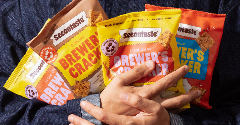
How Secon Taste is putting upcycled snacks on shelves
4 Aug 2026
Hungarian zero-waste startup Secon Taste is turning surplus food into upcycled snacks such as fibre-packed granola, instant porridge, and a circular coffee-tasting box.
Read more
Codex sets global thresholds for ‘may contain’ labels
3 Aug 2026
Codex Alimentarius has adopted its first global guidance on when to use “may contain” allergen warnings, setting thresholds intended to stop the label being used as blanket legal cover.
Read more