
Ingredients Categories
Finished Products
Finished Food Categories
- Bakery
- Beverages / Juices
- Cereal and grain products
- Confectionery
- Cooking Fats & Oils
- Dairy
- Egg products
- Fruits & Vegetables
- Infant & Baby food
- Meat, Poultry & Fish
- Nuts & Seeds products
- Other Finished Food Categories
- Pet Food
- Plant-based foods
- Prepared foods
- Sauces & Seasonings
- Sweet & Savoury Spreads
Specialised Finished Products
- Bee products
- Biotic products
- Dietary supplements
- Energy drinks
- Functional beverages
- Functional confectionery
- Functional food
- Functional powders
- Meal replacement products
- Nutricosmetics
- Other Specialised Finished Products
- Pet Dietary Supplements
- Pharma and OTC products
- Protein products
- Sugar replacers / Sweeteners
Health & Wellness Areas
Delivery Formats
Operations & Services
- 3D printing
- Analysis/ Testing
- Auditing & certifications
- Blending & mixing
- Bottling
- Certification
- Clinical trials
- Co-packing
- Coating
- Consulting
- Contract manufacturing
- Drying
- Electrospinning
- Encapsulating
- Enzymatic processing
- Extracting
- Extrusion
- Fat structuring
- Fermentation
- Filling
- Flavour development
- Freeze drying
- Granulating/ grinding/ milling / mixing
- High-pressure processing
- Labelling
- Other Operations & Services
- Packaging
- Packet filling
- Pasturising
- Quality assurance
- Saccharification
- Shear cell processing
- Spray drying
- Sterilisation
- Storage & Logistics
- Tabletting
- Toasting / roasting
- Ultra-high temperature processing
News
China leads the global boom for probiotics
Katja Knox, Editorial Account Manager 30 Mar 2022
Probiotics are experiencing a boom in global demand - particularly in China - as consumers look for functional ingredients in food and drink products that can improve their health.
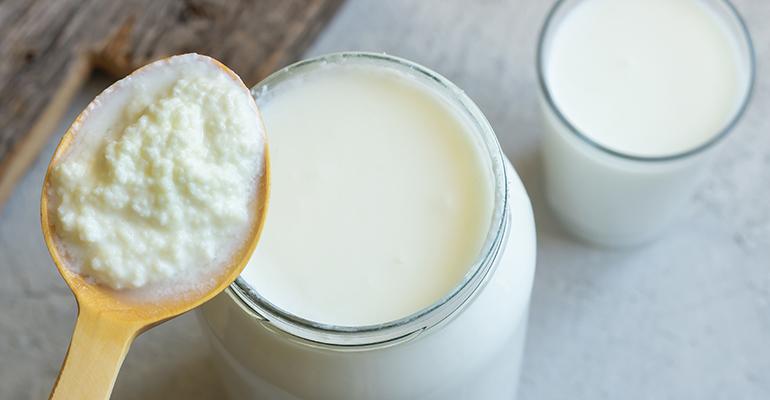
Probiotics are functional bacteria that help regulate a person’s gut microbiome by fighting off 'bad' bacteria that unbalance the system. What was once a nutritional supplement primarily associated with yoghurt and kefir to support digestion has now become an addition in a wide variety of products from cereal to juice.
In the Asia-Pacific region, product launches with digestive health claims have grown by 23% between 2016 and 2021, according to Mintel. In 2020, China surpassed both the US and Europe to become the top global market for probiotic yoghurt and supplement sales.
In Europe, sales of probiotic supplements, probiotic yoghurt and sour milk products attained $10.2 billion in 2019, and the region accounted for nearly a third of global probiotic supplement consumption. In North America, where the probiotic market is dominated by the US, the market for probiotics is anticipated to reach $14.28 billion (€13.01 billion) by 2024, according to Mordor Intelligence.
Research explores what probiotics can improve in the body
This growth in demand has spurred the expansion of probiotic use by manufacturers. Research in recent years has explored and found links between probiotic-supported gut health and major organs including the brain, lungs and skin. Gut microbiota affect a wide range of health concerns and have been shown to also help manage inflammation as well as improve immunity.
With the effects of Covid-19 still fresh in mind, global manufacturers have had the opportunity to play to the advantages that probiotics can provide for an individual's health. Mintel research found that almost three in five US adults are seeking foods that encourage a healthy gut or microbiome. The US Department of Agriculture's Economic Research Service found that Americans' annual consumption of yoghurt has increased from 13.4 pounds (6.08 kilograms) in 2010 to 13.8 pounds (6.26 kilograms) in 2021.
Manufacturers invest in infusing products with probiotics
Awareness of the link between probiotics, gut health and overall wellbeing is growing, but there is still an opportunity for the market to grow if companies educating consumers about the benefits of probiotics. A survey from Danish ingredients manufacturer Chr. Hansen found that across 16 countries, 48% of respondents consumed probiotics daily or almost daily. Of those surveyed, 71% were interested in further education about the benefits of probiotics and were currently primarily reliant on packaging and online resources to deepen their understanding.
In Europe where the European Food Safety Authority (EFSA) has taken a tough stance on label health claims, many consumers are searching for alternate sources of information to help them make purchase decisions. This presents an opportunity for manufacturers to educate consumers and drive interest in their products.
Twin trends: Clean label and functional health
The focus on gut health mirrors another trend: clean label. With more consumers paying attention to how microbiota can support their overall health through their gut, they have also begun to look at how other ingredients affect their overall wellbeing. As part of this trend, there has been an increase in clean-label products that are free from hormones, pesticides and artificial sweeteners and preservatives.
Sales of clean label ingredients are expected to jump from $38.8 billion (€35.34 billion) in 2021 to $64.1 billion (€58.38 billion) in 2026 according to data from Market Data Forecast.

Get more of our news on Google
Set Ingredients Network as a 'Preferred Source' to get quicker access to the news you value.
Related news

Do the US dietary guidelines put UPFs under pressure?
10 Sep 2026
Will the US dietary guidelines change the way Americans eat, swapping ultra-processed foods for whole foods? We asked Dr Barry Popkin, renowned nutrition and obesity researcher.
Read more
Food fraud costs UK economy £2bn each year
9 Sep 2026
Food fraud is costing the UK economy up to £2 billion (€2.3 billion) every year although the food sector is more “resilient” than others, according to a recent study.
Read more
Kellogg accelerates work to remove artificial colours from all US cereals
3 Sep 2026
WK Kellogg has announced an accelerated timeline to eliminate all artificial colours and the chemical preservative, BHT, across its full US portfolio of cereals and cereal packaging.
Read more
Skimpflation: An ‘unfair’ and risky approach to keeping prices low
2 Sep 2026
Consumers see skimpflation – reducing the quality of ingredients due to rising costs – as more unfair than shrinkflation, making it a risky strategy according to recent research.
Read more
‘Urgent gaps’ in achieving 2030 food system goals
27 Aug 2026
Global food systems are failing to meet 2030 targets across indicators including health, environment, and resilience, according to a report co-authored by the Food and Agriculture Organisation (FAO).
Read more
Popular barbecue staples experience sharp price increases
19 Aug 2026
The typical cost of US shoppers’ barbecue baskets has risen by 12% over the past year – the fastest annual rise in a decade, figures from The Economist show.
Read more
Savoury protein snacks shake up the on-the-go market
10 Aug 2026
Sweet flavours have dominated the high-protein snack category but savoury snacks, such as cheese bars and meat sticks, can appeal to health-conscious consumers.
Read more
Digital twin technology gains ground in food manufacturing
6 Aug 2026
Food and beverage companies are increasingly turning to digital twins to optimise and automate manufacturing processes, but opportunities stretch far beyond this, say experts.
Read more
Nestlé invests in regeneratively farmed wheat for KitKat
5 Aug 2026
Nestlé will pay a premium for Wildfarmed’s regeneratively farmed wheat but the CPG remains reticent to promote the move on packs of its KitKat bars.
Read more
Codex sets global thresholds for ‘may contain’ labels
3 Aug 2026
Codex Alimentarius has adopted its first global guidance on when to use “may contain” allergen warnings, setting thresholds intended to stop the label being used as blanket legal cover.
Read more