
Ingredients Categories
Finished Products
Finished Food Categories
- Bakery
- Beverages / Juices
- Cereal and grain products
- Confectionery
- Cooking Fats & Oils
- Dairy
- Egg products
- Fruits & Vegetables
- Infant & Baby food
- Meat, Poultry & Fish
- Nuts & Seeds products
- Other Finished Food Categories
- Pet Food
- Plant-based foods
- Prepared foods
- Sauces & Seasonings
- Sweet & Savoury Spreads
Specialised Finished Products
- Bee products
- Biotic products
- Dietary supplements
- Energy drinks
- Functional beverages
- Functional confectionery
- Functional food
- Functional powders
- Meal replacement products
- Nutricosmetics
- Other Specialised Finished Products
- Pet Dietary Supplements
- Pharma and OTC products
- Protein products
- Sugar replacers / Sweeteners
Health & Wellness Areas
Delivery Formats
Operations & Services
- 3D printing
- Analysis/ Testing
- Auditing & certifications
- Blending & mixing
- Bottling
- Certification
- Clinical trials
- Co-packing
- Coating
- Consulting
- Contract manufacturing
- Drying
- Electrospinning
- Encapsulating
- Enzymatic processing
- Extracting
- Extrusion
- Fat structuring
- Fermentation
- Filling
- Flavour development
- Freeze drying
- Granulating/ grinding/ milling / mixing
- High-pressure processing
- Labelling
- Other Operations & Services
- Packaging
- Packet filling
- Pasturising
- Quality assurance
- Saccharification
- Shear cell processing
- Spray drying
- Sterilisation
- Storage & Logistics
- Tabletting
- Toasting / roasting
- Ultra-high temperature processing
News
Is it time for a global definition of whole grain?
Natasha Spencer-Jolliffe, Freelance Journalist 30 Dec 2024Amid a lack of harmonisation, the European Food Information Council (EUFIC) is calling for a global definition of the term whole grain to end consumer confusion.
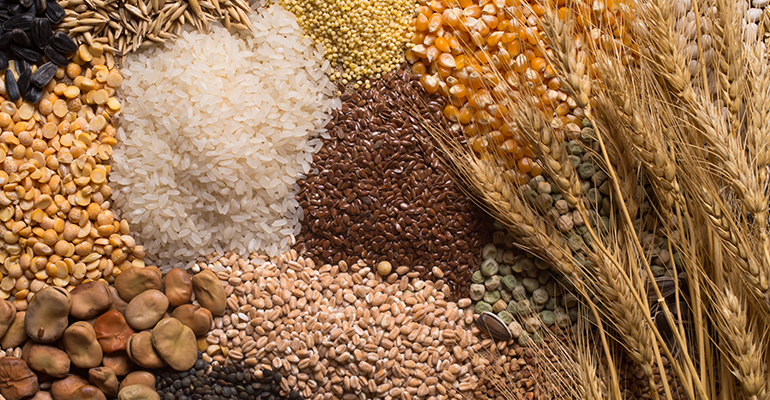
The food sector lacks a global standardised way to define whole grains, prompting confusion and potential differences in understanding its exact meaning.
“A global definition of whole grains has been elusive for several reasons, primarily due to differences in cultural, culinary and regulatory contexts across the world,” Carlos Abundancia, outreach area lead at the European Food Information Council (EUFIC), told Ingredients Network.
Cultural diversity and dietary traditions are leading factors influencing whole grain definition difficulties. Whole grains vary widely in how they are grown, processed and consumed across different regions. “These cultural variations make it difficult to create a single definition that encompasses all perspectives,” said Abundancia.
Variations in the ingredients cause challenges due to grain types and processing differences. Whole grains include a broad category of cereal grains, pseudocereals (like quinoa) and their derived products. Processing methods, such as milling, sprouting or fermentation, can alter the grains’ structure and nutrient profile, creating disagreements over what qualifies as “whole”.
Differences in opinion also exist on what constitutes a whole grain food. If its whole grain attributes are being called out in the product name, most consumers will assume the food contributes significantly to their daily intake recommendations. “But defining the minimum whole grain threshold that should be met in order to label a food as ‘whole grain’ has not been consistent,” said Abundancia.
Nutritional versus commercial considerations are also at play as some definitions prioritise nutritional content, focusing on fibre, vitamins and minerals. In contrast, commercial considerations, such as food labelling and marketing regulations, shape others. “This divergence complicates the creation of a unified standard,” Abundancia added.
Reaching a global consensus on whole grain’s definition is full of complexities as it involves aligning the perspectives of governments, health organisations, food manufacturers and agricultural stakeholders. “This process is slow and often hindered by competing priorities, regulatory frameworks and bureaucracy requirements,” said Abundancia. A lack of harmonised standards contributes to these nuances too.
“Various organisations and countries have developed their own definitions of whole grains, leading to inconsistencies,” he added.
The recent global consensus definitions for whole grain ingredients and whole grain foods include specific percentage thresholds for whole grain content, noting a minimum of 50% for general classification and at least 25% for front-of-pack content claims.
Whole grain definitions around the world
Definitions of whole grains vary globally, reflecting cultural, regulatory, and scientific differences. “These discrepancies have implications for food labelling, consumer understanding and dietary guidelines,” said Anbundancia.
● European Union (EU)
The EUFIC said the European Union’s (EU) definition lacks harmonisation across member states. Some countries, like Denmark and Germany, have stringent guidelines requiring a certain percentage of whole grains in products labelled as “whole grain”. In contrast, other nations rely on broader or less regulated interpretations. “This inconsistency affects cross-border food labelling and trade,” Anbundancia said.
● The UK
There is no single legally binding definition of whole grains or whole grain foods. However, organisations such as the Institute of Grocery Distribution (IGD) suggest a product should contain at least eight grams of whole grain ingredients per serving to be labelled as a whole grain food. “This recommendation is not enforceable and allows variability in products marketed as whole grain, some of which may also be high in sugar or fat,” he said.
● The US
The US Food and Drug Administration (FDA) defines whole grains as cereal grains consisting of the intact, ground, cracked or flaked kernel, including the bran, germ and endosperm in their original proportions. Products must retain these components to be labelled as “whole grain”.
The FDA has released draft guidance indicating that foods should only be labelled “whole grain” if 100% of their grain ingredients are whole. “Because it is only draft guidance, the application of this standard is not consistent,” Anbundancia said.
● Australia and New Zealand
Food Standards Australia New Zealand (FSANZ) defines whole grains similarly to the US but with added flexibility. Products can include processed grains if the key components remain in the correct proportions. “There is no strict minimum content requirement for labelling, creating room for variation in product representation,” said Anbundancia.
● Asia
In countries like Japan and South Korea, whole grain definitions are less standardised and often influenced by traditional dietary practices. For example, while brown rice is an everyday whole grain staple, the nations focus less on mixed or processed grains. “Whole grain education and labelling are still emerging concepts in many parts of Asia,” added Anbundancia.
Global initiatives are emerging
The Whole Grain Initiative, an international consortium, has established a standardised definition to reduce these regional discrepancies. The group proposes that foods with at least 50% whole grain content by dry weight qualify as whole grain foods. Products containing 25% content are sufficient for front-of-pack content claims. However, adoption is voluntary, leading to varied implementation.
EUFIC supports these definitions as they provide minimum content standards, the inclusion of specific processing methods, front-of-pack labelling clarity, focus on consumer transparency and uniformity across regions.
“[This] represents a significant step forward in addressing these challenges, and the pending adoption of these definitions and labelling guidelines by ISO represents a very positive movement,” said Anbundancia. “However, widespread adoption and application remain dependent on collaborative efforts among diverse global stakeholders,” Anbundancia added.
A group of 45 whole grain specialists representing 19 different countries established these definitions. Setting out parameters, these strive to achieve consumer transparency and to guide regulatory and marketing practices more effectively. The proposed definition of whole grain ingredients states that whole grains are defined as intact, ground, cracked, or flaked kernels, retaining their key components (bran, germ, and endosperm) in the same proportions found in the intact grain.
“These global consensus definitions represent a significant step toward harmonising food standards, fostering better public understanding, and ensuring that dietary recommendations for whole grains align with actual product content,” said Anbundancia. “Harmonising these definitions is crucial for clear labelling, consumer trust, and aligning dietary guidelines worldwide,” added Anbundancia.
“We want every consumer to have access to clear and transparent information about their food options so that making good choices for their health is easy and uncomplicated,” said Caroline Sluyter, chair of the Whole Grain Initiative’s governing board.
While policymakers work towards clearer definitions, the EUFIC calls on consumers to take immediate action to claim the health benefits with its #SwitchToWholeGrains four-week initiative. The movement encourages consumers to take a small but meaningful step towards healthier, more sustainable living by adding whole grains to their diets.

Get more of our news on Google
Set Ingredients Network as a 'Preferred Source' to get quicker access to the news you value.
Related news

Do the US dietary guidelines put UPFs under pressure?
10 Sep 2026
Will the US dietary guidelines change the way Americans eat, swapping ultra-processed foods for whole foods? We asked Dr Barry Popkin, renowned nutrition and obesity researcher.
Read more
Skimpflation: An ‘unfair’ and risky approach to keeping prices low
2 Sep 2026
Consumers see skimpflation – reducing the quality of ingredients due to rising costs – as more unfair than shrinkflation, making it a risky strategy according to recent research.
Read more
‘Urgent gaps’ in achieving 2030 food system goals
27 Aug 2026
Global food systems are failing to meet 2030 targets across indicators including health, environment, and resilience, according to a report co-authored by the Food and Agriculture Organisation (FAO).
Read more
Seven-Eleven uses microbial testing tech to extend katsudon shelf life
26 Aug 2026
Japanese retail company Seven-Eleven has improved its factory’s microbial environment to keep comfort-food staple, katsudon, fresher for longer.
Read more
Chimac’s fusion sauces bring Korean flavours to Europe
25 Aug 2026
Irish sauce brand Chimac is tapping into Korea’s culinary traditions, bringing its flavours and products to European consumers who want a taste of K-food.
Read more
Global demand for instant noodles continues to rise
24 Aug 2026
Global demand for instant noodles reached 124.21 billion servings last year, representing a 0.7% year-on-year increase – or 900 million extra servings.
Read more
China beverages: Is herbal innovation the future?
20 Aug 2026
Herbal and botanical innovation in China's drinks market continues to grow, with ingredients like astragalus root, ginger, and ginseng in the spotlight – and focus shifting far beyond refreshment.
Read more
Popular barbecue staples experience sharp price increases
19 Aug 2026
The typical cost of US shoppers’ barbecue baskets has risen by 12% over the past year – the fastest annual rise in a decade, figures from The Economist show.
Read more
Hot NPD: Nissin launches first cold-water Cup Noodles
18 Aug 2026
Nissin is taking one of Japan’s most iconic instant meals in a completely new direction with the launch of the first cold water-only Cup Noodles in the brand’s 55-year history.
Read more
Manam Chocolate aims to bring premium Indian cacao to 'the world stage'
11 Aug 2026
Craft chocolate brand Manam Chocolate is investing in local expansion and supply chain innovation throughout India as it works to build out the premium reputation of its locally produced cacao products.
Read more