
Ingredients Categories
Finished Products
Finished Food Categories
- Bakery
- Beverages / Juices
- Cereal and grain products
- Confectionery
- Cooking Fats & Oils
- Dairy
- Egg products
- Fruits & Vegetables
- Infant & Baby food
- Meat, Poultry & Fish
- Nuts & Seeds products
- Other Finished Food Categories
- Pet Food
- Plant-based foods
- Prepared foods
- Sauces & Seasonings
- Sweet & Savoury Spreads
Specialised Finished Products
- Bee products
- Biotic products
- Dietary supplements
- Energy drinks
- Functional beverages
- Functional confectionery
- Functional food
- Functional powders
- Meal replacement products
- Nutricosmetics
- Other Specialised Finished Products
- Pet Dietary Supplements
- Pharma and OTC products
- Protein products
- Sugar replacers / Sweeteners
Health & Wellness Areas
Delivery Formats
Operations & Services
- 3D printing
- Analysis/ Testing
- Auditing & certifications
- Blending & mixing
- Bottling
- Certification
- Clinical trials
- Co-packing
- Coating
- Consulting
- Contract manufacturing
- Drying
- Electrospinning
- Encapsulating
- Enzymatic processing
- Extracting
- Extrusion
- Fat structuring
- Fermentation
- Filling
- Flavour development
- Freeze drying
- Granulating/ grinding/ milling / mixing
- High-pressure processing
- Labelling
- Other Operations & Services
- Packaging
- Packet filling
- Pasturising
- Quality assurance
- Saccharification
- Shear cell processing
- Spray drying
- Sterilisation
- Storage & Logistics
- Tabletting
- Toasting / roasting
- Ultra-high temperature processing
News
US legislative push to ban 7 food additives in schools
Natasha Spencer-Jolliffe, Freelance Journalist 17 Apr 2024Proposed legislation would prohibit the use of seven additives – six artificial colours and titanium dioxide – in food and drink served in US state schools.
The California Assembly Bill 2316 aims to prohibit foods in schools sold during the school day that contain colour additives. If enacted, the Bill would ban Red Dye No. 40, Yellow Dye No. 5, Yellow Dye No. 6, Blue Dye No. 1, Blue Dye No. 2, and Green Dye No. 3, and the food additive titanium dioxide.
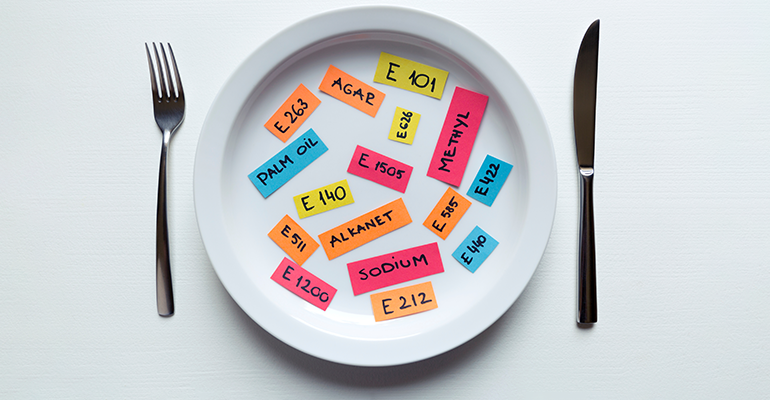
“It’s unlikely the bill will be welcomed by the food industry due to the complexity and costs it adds,” Rebecca Kaya, regulatory specialist at Ashbury, a regulatory consultant for retailers and manufacturers, told Ingredients Network.
The seven additives the proposed law would ban have been associated with hyperactivity including behavioural difficulties and decreased attention in children, Kaya says. In addition, the law also aims to eliminate colours banned in the European Union (EU) because of concern around genotoxicity, which refers to DNA damage that can cause cancer and impact immunity.
“The bill does not define ‘toxic’ but lists the specific synthetic colours that would be banned based on pre-existing scientific assessment and a state research assessment,” says Kaya.
However, the additives have already undergone safety assessments completed by the Food and Drug Administration (FDA) and are allowed in food nationally in the US. Due to these safety assessments and its existing presence, Kaya says: “This would make it hard to comply with a California-specific law.”
As the bill is also targeted at foods sold in schools, Kaya adds: “This could cause other distribution difficulties for products sold across multiple channels.”
 © AdobeStock/LIGHTFIELD STUDIOS
Anticipated changes to school meals
If the new bill comes into force, it will only impact foods sold within school food service, as opposed to the broader manufacturing sector and brands selling their products in California and the US. “So the impact is probably minimal,” Kaya says.
The legislation would, however, require products containing these colours to be reformulated, relabelled or removed from distribution in the US by 2027. Reformulated products would still have to comply with other school nutrition requirements.
If products remain unchanged, they could still be sold at activities 30 minutes before and 30 minutes after the school bell but not during the school day. “If a brand chose to manufacture two versions of a product, one with and one without the additives, complying would require close management of the supply chain,” Kaya adds.
Food colour regulation in the EU and Great Britain
The proposed US ban on food additives only used in food and drinks served in schools is different from how the EU and Great Britain (GB) controls these food additives. All food additives in EU and GB are permitted in categories of food types. As a result, manufacturers or brands cannot use one food additive in any food. Instead, they must first look at the category of food in which it is permitted.
“One of the additives the US is banning is not permitted at all in either the EU or in Great Britain (England, Scotland and Wales), while others have been deemed to affect children’s activity levels and attention,” Kaya says. These are known as The ‘Southampton Six’ colours: Tartrazine (E102), Quinoline Yellow (E104), Sunset Yellow (E110), Carmoisine (E122), Ponceau 4R (E124) and Allura Red (E129).
Banning additives
“The fact they have only banned the colours in food in schools seems senseless to me,” says Kaya. “Either the colours are not a good idea in foods targeted at children/foods they regularly consume, and they should be regulated similarly to those in the UK or EU, or they are fine,” Kaya adds.

Get more of our news on Google
Set Ingredients Network as a 'Preferred Source' to get quicker access to the news you value.
Related news

Do the US dietary guidelines put UPFs under pressure?
10 Sep 2026
Will the US dietary guidelines change the way Americans eat, swapping ultra-processed foods for whole foods? We asked Dr Barry Popkin, renowned nutrition and obesity researcher.
Read more
Food fraud costs UK economy £2bn each year
9 Sep 2026
Food fraud is costing the UK economy up to £2 billion (€2.3 billion) every year although the food sector is more “resilient” than others, according to a recent study.
Read more
Skimpflation: An ‘unfair’ and risky approach to keeping prices low
2 Sep 2026
Consumers see skimpflation – reducing the quality of ingredients due to rising costs – as more unfair than shrinkflation, making it a risky strategy according to recent research.
Read more
NielsenIQ’s EU barometer shows Britain leading in grocery inflation
31 Aug 2026
Britain was the only country to record grocery inflation above 2%, according to NielsenIQ data that compared Europe’s five biggest grocery markets from February to May 2026.
Read more
‘Urgent gaps’ in achieving 2030 food system goals
27 Aug 2026
Global food systems are failing to meet 2030 targets across indicators including health, environment, and resilience, according to a report co-authored by the Food and Agriculture Organisation (FAO).
Read more
China beverages: Is herbal innovation the future?
20 Aug 2026
Herbal and botanical innovation in China's drinks market continues to grow, with ingredients like astragalus root, ginger, and ginseng in the spotlight – and focus shifting far beyond refreshment.
Read more
Popular barbecue staples experience sharp price increases
19 Aug 2026
The typical cost of US shoppers’ barbecue baskets has risen by 12% over the past year – the fastest annual rise in a decade, figures from The Economist show.
Read more
Beyond 'nice to have': A spotlight on US functional beverages
12 Aug 2026
Functional beverage interest in the US is gaining important ground as consumers now expect function rather than see it as "nice to have", and there are clear market gaps for growth, according to Spate.
Read more
Manam Chocolate aims to bring premium Indian cacao to 'the world stage'
11 Aug 2026
Craft chocolate brand Manam Chocolate is investing in local expansion and supply chain innovation throughout India as it works to build out the premium reputation of its locally produced cacao products.
Read more
Digital twin technology gains ground in food manufacturing
6 Aug 2026
Food and beverage companies are increasingly turning to digital twins to optimise and automate manufacturing processes, but opportunities stretch far beyond this, say experts.
Read more