
Ingredients Categories
Finished Products
Finished Food Categories
- Bakery
- Beverages / Juices
- Cereal and grain products
- Confectionery
- Cooking Fats & Oils
- Dairy
- Egg products
- Fruits & Vegetables
- Infant & Baby food
- Meat, Poultry & Fish
- Nuts & Seeds products
- Other Finished Food Categories
- Pet Food
- Plant-based foods
- Prepared foods
- Sauces & Seasonings
- Sweet & Savoury Spreads
Specialised Finished Products
- Bee products
- Biotic products
- Dietary supplements
- Energy drinks
- Functional beverages
- Functional confectionery
- Functional food
- Functional powders
- Meal replacement products
- Nutricosmetics
- Other Specialised Finished Products
- Pet Dietary Supplements
- Pharma and OTC products
- Protein products
- Sugar replacers / Sweeteners
Health & Wellness Areas
Delivery Formats
Operations & Services
- 3D printing
- Analysis/ Testing
- Auditing & certifications
- Blending & mixing
- Bottling
- Certification
- Clinical trials
- Co-packing
- Coating
- Consulting
- Contract manufacturing
- Drying
- Electrospinning
- Encapsulating
- Enzymatic processing
- Extracting
- Extrusion
- Fat structuring
- Fermentation
- Filling
- Flavour development
- Freeze drying
- Granulating/ grinding/ milling / mixing
- High-pressure processing
- Labelling
- Other Operations & Services
- Packaging
- Packet filling
- Pasturising
- Quality assurance
- Saccharification
- Shear cell processing
- Spray drying
- Sterilisation
- Storage & Logistics
- Tabletting
- Toasting / roasting
- Ultra-high temperature processing
News
Portugal officially adopts NutriScore
Niamh Michail, Head of Publishing 10 Apr 2024Portugal has adopted the NutriScore as its official – but voluntary – front-of-pack nutrition label to promote healthy eating, with researchers calling this “a great victory for science and public health”.
On 4 April 2024, the Portuguese government published Decree n.º 3637/2024 in its official gazette, confirming that the NutriScore label was the nutrition label that had “the best conditions to be adopted in Portugal”.
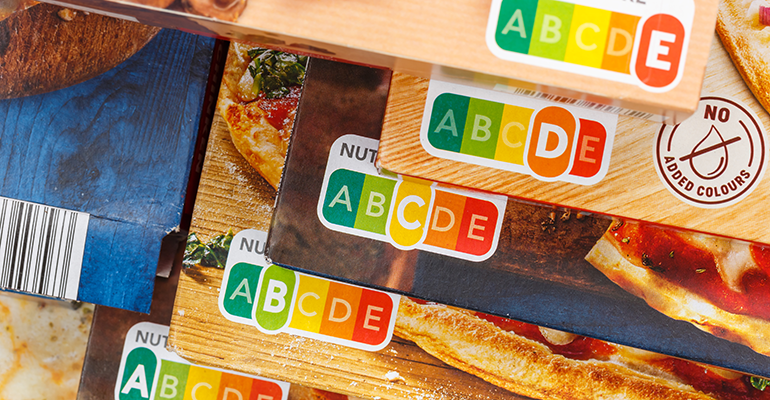
This means that eight European countries have adopted the NutriScore label as their official front-of-pack nutrition label, seven of which are EU member states: France, Belgium, Germany, Luxembourg, the Netherlands, Spain, Portugal.
A clear, simple way to guide healthy eating choices
Penned by the Portuguese secretary of state for health promotion, Margarida Ferna, the regulation’s text noted that the high frequency of chronic diet-related diseases required public health interventions, in particular making nutritional information available to consumers through food packaging.
“[This] can guide healthier eating decisions, especially when this information is presented in a simple and clear way,” it noted.
Portugal’s National Programme for the Promotion of Healthy Eating (PNPAS) has conducted several studies showing that a clear, easy-to-understand nutrition label could help Portuguese consumers make healthier eating choices.
The studies showed that 40% of those surveyed did not understand the nutritional information that is currently presented on food labels and that this difficulty was considerably greater among those with less education. The studies also found that nutrition labels using a colour system may be more easily understood, and that people are between three and five times more likely to choose a healthier food product when such nutritional labels are used on the pack.
While some retailers and manufacturers in Portugal were already using NutriScore on their products – ALDI and Nestlé for example – the government also noted that, in the absence of an officially-backed label, some food businesses were adding other nutrition labels to their product packaging, which was confusing for consumers.
“Therefore, it is imperative to implement a single nutritional labelling system, as well as to encourage its use among the various economic operators in the food sector,” it added.
‘We hope that other countries will follow’
Professor Serge Hercberg from the University of Sorbonne in Paris and University Paris Cité, who led the team of researchers that created NutriScore, said this was “a great victory for science and public health”.
“Congratulations to our Portuguese colleagues and to all those who supported the Nutri-Score and contributed to its adoption in Portugal,” he added.
“We hope that, despite the reluctance of the European Commission which gives in to pressure of economic and politic lobbies and has not yet adopted the NutriScore as the mandatory nutritional front-of-pack label for Europe, other countries will follow the example of Portugal and join the eight European countries that have already adopted and implemented the NutriScore.”
Pressure on Commission to introduce pan-EU nutrition label
National governments of EU member states cannot make front-of-pack nutrition labelling mandatory as this could constitute a trade barrier within the bloc’s single market. The European Commission has committed to introduce an obligatory pan-EU label but this has been stalled for years in the face of strong opposition from certain industrial sectors and national governments, such as Italy.
However, civil society and public organisations have been calling on the Commission to act.
Reacting to the Portuguese announcement, consumer rights organisation and food industry watchdog Foodwatch International tweeted on X: “EU Commission, it's time for a unified, mandatory front of pack nutrition label across Europe. Let's make health a priority!”
Emma Calvert, senior food policy officer at Brussels-based consumer rights organisation BEUC previously told Ingredients Network: “[We] support the European Commission’s commitment to come forward with a mandatory EU-wide front-of-pack nutrition label and we believe the Nutri-Score is the best label for the job.
“However, should the Commission fail to progress on this file, member states should be permitted to go further and make a front-of-pack nutrition label mandatory in their member state.”

Get more of our news on Google
Set Ingredients Network as a 'Preferred Source' to get quicker access to the news you value.
Related news

Do the US dietary guidelines put UPFs under pressure?
10 Sep 2026
Will the US dietary guidelines change the way Americans eat, swapping ultra-processed foods for whole foods? We asked Dr Barry Popkin, renowned nutrition and obesity researcher.
Read more
Food fraud costs UK economy £2bn each year
9 Sep 2026
Food fraud is costing the UK economy up to £2 billion (€2.3 billion) every year although the food sector is more “resilient” than others, according to a recent study.
Read more
Kellogg accelerates work to remove artificial colours from all US cereals
3 Sep 2026
WK Kellogg has announced an accelerated timeline to eliminate all artificial colours and the chemical preservative, BHT, across its full US portfolio of cereals and cereal packaging.
Read more
Skimpflation: An ‘unfair’ and risky approach to keeping prices low
2 Sep 2026
Consumers see skimpflation – reducing the quality of ingredients due to rising costs – as more unfair than shrinkflation, making it a risky strategy according to recent research.
Read more
NielsenIQ’s EU barometer shows Britain leading in grocery inflation
31 Aug 2026
Britain was the only country to record grocery inflation above 2%, according to NielsenIQ data that compared Europe’s five biggest grocery markets from February to May 2026.
Read more
‘Urgent gaps’ in achieving 2030 food system goals
27 Aug 2026
Global food systems are failing to meet 2030 targets across indicators including health, environment, and resilience, according to a report co-authored by the Food and Agriculture Organisation (FAO).
Read more
Chimac’s fusion sauces bring Korean flavours to Europe
25 Aug 2026
Irish sauce brand Chimac is tapping into Korea’s culinary traditions, bringing its flavours and products to European consumers who want a taste of K-food.
Read more
Global demand for instant noodles continues to rise
24 Aug 2026
Global demand for instant noodles reached 124.21 billion servings last year, representing a 0.7% year-on-year increase – or 900 million extra servings.
Read more
Popular barbecue staples experience sharp price increases
19 Aug 2026
The typical cost of US shoppers’ barbecue baskets has risen by 12% over the past year – the fastest annual rise in a decade, figures from The Economist show.
Read more
Hot NPD: Nissin launches first cold-water Cup Noodles
18 Aug 2026
Nissin is taking one of Japan’s most iconic instant meals in a completely new direction with the launch of the first cold water-only Cup Noodles in the brand’s 55-year history.
Read more