
Ingredients Categories
Finished Products
Finished Food Categories
- Bakery
- Beverages / Juices
- Cereal and grain products
- Confectionery
- Cooking Fats & Oils
- Dairy
- Egg products
- Fruits & Vegetables
- Infant & Baby food
- Meat, Poultry & Fish
- Nuts & Seeds products
- Other Finished Food Categories
- Pet Food
- Plant-based foods
- Prepared foods
- Sauces & Seasonings
- Sweet & Savoury Spreads
Specialised Finished Products
- Bee products
- Biotic products
- Dietary supplements
- Energy drinks
- Functional beverages
- Functional confectionery
- Functional food
- Functional powders
- Meal replacement products
- Nutricosmetics
- Other Specialised Finished Products
- Pet Dietary Supplements
- Pharma and OTC products
- Protein products
- Sugar replacers / Sweeteners
Health & Wellness Areas
Delivery Formats
Operations & Services
- 3D printing
- Analysis/ Testing
- Auditing & certifications
- Blending & mixing
- Bottling
- Certification
- Clinical trials
- Co-packing
- Coating
- Consulting
- Contract manufacturing
- Drying
- Electrospinning
- Encapsulating
- Enzymatic processing
- Extracting
- Extrusion
- Fat structuring
- Fermentation
- Filling
- Flavour development
- Freeze drying
- Granulating/ grinding/ milling / mixing
- High-pressure processing
- Labelling
- Other Operations & Services
- Packaging
- Packet filling
- Pasturising
- Quality assurance
- Saccharification
- Shear cell processing
- Spray drying
- Sterilisation
- Storage & Logistics
- Tabletting
- Toasting / roasting
- Ultra-high temperature processing
News
High-protein patents hit a global high
David Burrows, Freelance Journalist 27 Nov 2026Demand for functional foods has pushed high-protein patent applications to an all-time high, according to World Intellectual Property Organisation data.
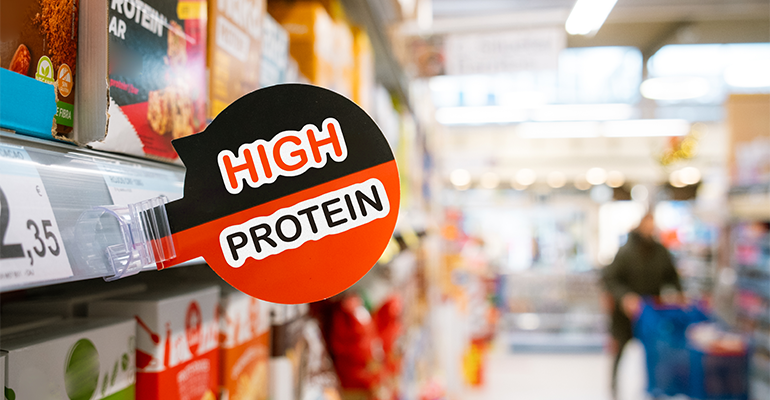
The number of global patent applications for high-protein foods hit a record high of 5,626 in the year to 30 June 2026, up from 5,148 the previous year, according to an analysis of data from the World Intellectual Property Organisation.
At a glance:
- Health-conscious consumers are driving up demand for functional foods.
- Food companies are drawing on novel proteins to enrich products.
- GLP-1s are driving innovation as food companies look to manufacture high protein ranges.
Strong consumer demand continues to spur innovation in food technology as manufacturers look for “every way possible” to add protein to their products, said intellectual property law firm Mathys & Squire, which published the data.
In the space of five years, there has been an 80% increase in the number of patent applications filed for high-protein compared with the 3,122 filings made in the year to 30 June 2021.
Growth in demand for high-protein foods has historically been driven by consumers seeking to lose weight or support muscle growth and has become mainstream as eating preferences have evolved. New US Dietary Guidelines have, for example, inverted the traditional food pyramid to place protein at its base, while the growing impact of GLP-1s on eating habits is driving greater protein consumption as brands roll out smaller, nutrient dense portions to meet demand.
“The goal for a lot of major food manufacturers has been to increase the protein content of some of their products, without changing the taste or appearance consumers expect,” explained Michael Stott, partner at Mathys & Squire. However, that is “not an easy task”, he added, with some manufacturers exploring new and disruptive approaches to achieving the high-protein goal — and “even using insect proteins to recreate conventional foods”.
There is huge demand and increased competition for whey ingredients to make protein-enriched foods. As Stott explained, this demand for high-protein foods is “so strong that manufacturers are looking for every possible way to add protein to their best-selling products. That has fuelled a wave of innovation in the food industry,” he added.
Higher numbers of high-protein patents
Nestlé (58 patents), Cargill (46) and Arla (28) were among the world’s top patent filers for high-protein food technologies, according to Mathys & Squire.
Examples of the technologies which were the subject of patent applications last year included:
● A high-protein dough made with whey microparticles that can be used in pastries.
● A plant-based whipping cream with more than twice the protein content of traditional whipping cream.
● A protein ingredient developed from microorganisms that can be used in industrial confectionery.
● A ready-to-drink, high-protein beverage that replicates the smell, texture and flavour of milk.
One of the most recent applications by Nestlé relates to “a hypoallergenic composition comprising a recombinant donkey β-lactoglobulin (BLG)”. Donkey BLG is hypoallergenic and therefore “of particular interest as a supplement for food products, as it can impart the functional, nutritional, and sensory attributes of milk proteins without the associated risk of allergic reactions. In addition, donkey BLG is interesting as it has a significant amount of leucine which is reported to have several musculoskeletal health benefits,” the document explains.
Applications for the recombinant donkey whey protein could include infant milk, sports nutrition and dairy-style foods and weight management products. The process involves precision fermentation, a branch of engineering biology that uses the natural abilities of certain microorganisms like yeast to produce high-quality, low-cost ingredients sustainably and quickly.
In June, Nestlé formed a “strategic innovation collaboration” with the US-based biotech company Helaina, which makes breast milk proteins using precision fermentation.
GLP-1s giving impetus to nutrient dense products
Weight-loss medications are also having an impact on the wave of high-protein formulations and innovations. Euromonitor has noted how manufacturers are increasingly turning to fermentation-based technologies — including microbial fermentation, enzymatic bioconversion, and precision fermentation — to enhance nutritional profiles without compromising portion sizes.
Research by the consultancy, Boston Consulting Group (BCG), of 1,500 GLP-1 users in August showed active users reporting that they plan to spend 15% more each month on average on fruits and vegetables and 11% more on high-protein foods. They also anticipate spending “substantially more” on high-fibre and whole-grain products.
BCG explained that the flip side is equally pronounced: users say they plan to spend 14% less on confectionery and 12% less on prepared frozen sides. Spending on salty snacks, alcohol, soft drinks, and chocolate is expected to fall by roughly 10% as GLP-1 users say they will eat these products less often and in smaller portions.
General Mills recently explained how it is “changing how people get their protein”. The owner of Cheerios and Häagen-Dazs said: “Today’s consumers are actively seeking protein in nearly everything they eat, from breakfast to dinner and every snack in between. What’s more, they’re unwilling to sacrifice delicious taste for nutritional benefits.”
From patents to product launches
New patents do not mean new products, of course — at least not in the immediate future. Many will have a number of commercial, technical, and regulatory hurdles to overcome before coming to market. Many others will never see the light of day. But the direction of travel is clear.
Stott noted that the current trend towards high-protein foods is, in some ways, a natural continuation of the earlier drive to develop meat alternatives. Indeed, many of the techniques originally developed for meat alternatives are now being used to create high-protein versions of a much wider range of foods.
He added: “This research is creating a vast library of hugely valuable intellectual property for food companies. Over time, that IP becomes a significant component of their valuations.”

Get more of our news on Google
Set Ingredients Network as a 'Preferred Source' to get quicker access to the news you value.
Related news

Packaging power: Colour is 'the first and dominant cue', says expert
25 Nov 2026
From Coca-Cola’s iconic red to Cadbury’s purple, packaging colour is a powerful neuroscience tool that captures attention, conveys quality, and even influences taste.
Read more
Saudi Arabia pursues global halal certification
17 Nov 2026
Saudi Arabia is pushing for harmonised global halal certification to unify standards worldwide and boost food development.
Read more
Supermarket cyber-attacks: How can retailers protect themselves?
11 Nov 2026
Cyber-attacks have hit supermarket refrigeration systems across Europe in recent weeks, highlighting the need for a coordinated response to cybercrime, says one expert.
Read more
China bets big on AI to ‘reshape’ the global agri-food system
10 Nov 2026
Leveraging AI is part of the Chinese government’s six-point consensus to deliver on its agri-food ambitions.
Read more
How manufacturers can reduce food loss in factory operations
4 Nov 2026
Small factory inefficiencies can send valuable ingredients down the drain, resulting in losses and prompting the sector to audit its waste-reduction methods. What solutions exist?
Read more
Whey protein production struggles to keep pace with demand
22 Oct 2026
Despite high whey protein prices and strong demand, growing production pressures are prompting questions about pricing sustainability, processing capacity, and alternative dairy options.
Read more
Manufacturers face volatility as food prices near four-year high
21 Oct 2026
Commodity pressures are mounting with the Food and Agriculture Organization’s (FAO) Food Price Index reaching its highest level since 2022.
Read more
Brazil pushes forward on restricting ultra-processed foods
14 Oct 2026
The Brazilian government is pushing ahead with its proposal calling on the World Health Organization (WHO) to restrict the marketing of ultra-processed foods – a move causing a mixed response.
Read more
UK biscuit maker pladis targets Chinese snack market for growth
6 Oct 2026
Pladis, the maker of iconic British biscuit brand McVitie’s, aims to boost disappointing profits by targeting China with products tailored to Chinese preferences.
Read more
Reinventing soda: Zero sugar, functional benefits, and new indulgence
30 Sep 2026
Zero-sugar, functional, and indulgent sodas are redefining what a carbonated soft drink can offer in today’s evolving market.
Read more